

PCS 21
Tattva Series
Castor Seed Meal PCS-21 | Organic Fertilizer & Soil Conditioner | Ecotika
Pure, slow-release organic plant food that feeds soil, builds roots, and naturally deters harmful soil pests.
₹141.00 – ₹1,350.00Price range: ₹141.00 through ₹1,350.00
Short Description
Ecotika Tattva Series Castor Seed Meal is a 100% natural, slow-release organic soil conditioner derived from cold-pressed castor cake. Rich in organic matter, nitrogen, phosphorus, and potassium, it steadily nourishes plants while conditioning potting soil and garden beds. In addition to providing essential plant nutrients, castor seed meal enhances microbial activity and acts as a natural soil pest deterrent, particularly against plant-parasitic nematodes and root-damaging soil grubs.
-
Key Benefits: Sustained nitrogen feed, improves soil structure, enhances microbial diversity, naturally deters soil pests and nematodes.
-
Major Applications: Potting mix conditioning, vegetable garden beds, flowering plants, fruit trees, and lawn top-dressing.
-
Dosage Summary: 20?30 grams per 12-inch pot once every 30?45 days; 100?150 grams per square meter for ground garden beds.

Why Choose this product
-
Slow-Release Organic Nutrition: Provides a steady supply of essential nutrients without the risk of root burn or chemical leaching typical of synthetic fertilizers.
-
Integrated Soil & Pest Health: Unlike standard fertilizers, castor seed meal contains naturally occurring compounds that inhibit root-knot nematodes and unwanted soil pests, protecting delicate root systems.
-
Soil Structure Enhancement: Increases soil organic matter, improves moisture retention in sandy soils, and enhances aeration in heavy clay soils.
-
Microbial Activation: Serves as a valuable carbon and nitrogen source for beneficial soil fungi and bacteria, building a resilient root ecosystem (rhizosphere).
-
Pure & Unadulterated: Made strictly from pure deoiled castor seed meal, processed cleanly without synthetic additives or chemical fillers.
Product Desciption
Ecotika Tattva Series Castor Seed Meal provides pure, botanical nutrition designed to build long-term soil fertility and support steady plant growth. Derived from the nutrient-dense residue of pressed castor seeds (Ricinus communis), this organic meal is naturally enriched with macro- and micronutrients bound within organic complexes.
When incorporated into potting soil or garden beds, soil microbes gradually break down the organic matter, releasing plant-available nitrogen, phosphorus, and potassium over several weeks. This slow release prevents nutrient spikes, ensuring balanced vegetative development, strong root expansion, and healthier foliage.
Beyond plant nutrition, castor seed meal plays a functional role in rhizosphere management. The natural alkaloids and proteins present in castor cake create an unfavorable environment for soil-borne pests such as root-knot nematodes, grubs, and cutworms. Soil physical properties are simultaneously improved: sandy soils gain increased moisture-holding capacity, while compacted clay soils achieve superior aeration and drainage.
Suitable Plants:
-
Container & Indoor Plants: Monsteras, Ficus, Palms, Pothos, and Philodendrons.
-
Flowering & Ornamental Plants: Roses, Hibiscus, Jasmine, Dahlias, and Bougainvillea.
-
Kitchen Gardens & Vegetables: Tomatoes, Peppers, Eggplants, Gourds, Leafy Greens, and Herbs.
-
Fruit Trees & Shrubs: Citrus, Guava, Mango, Pomegranate, and Papaya.
Problems this product helps address
-
Nitrogen Deficiency & Yellowing Leaves: Reverses general pale foliage (chlorosis) by providing a steady supply of organic nitrogen essential for chlorophyll synthesis.
-
Poor Soil Structure & Fast Drying Pots: Adds stable organic matter that increases moisture retention in light soils and improves aeration in compacted soils.
-
Nematode & Soil Grub Damage: Helps protect root systems in plants suffering from stunted growth caused by root-knot nematodes and soil grubs.
-
Nutrient Leaching: Prevents rapid nutrient washout in frequently watered container plants compared to quick-release synthetic options.
-
Low Soil Microbial Activity: Restores biological life in depleted, tired potting soils by serving as a microbial feed source.
Application method and dosage
Step-by-Step Application:
-
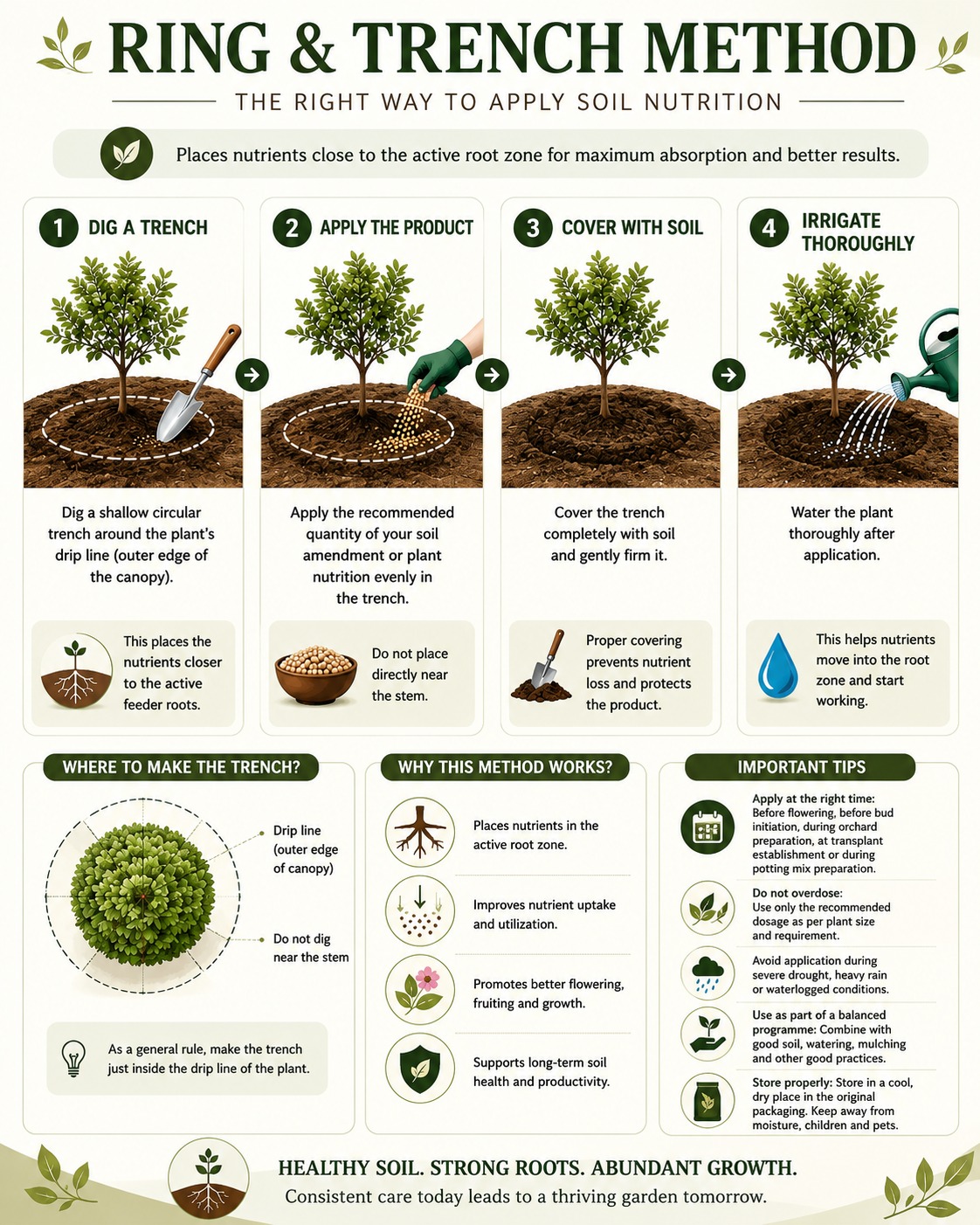
Soil Preparation: For potted plants, lightly loosen the top 1 to 2 inches of soil around the root zone, keeping clear of the main stem base.
-
Incorporation: Evenly sprinkle the recommended dosage over the loosened soil. Work the meal gently into the top layer to prevent surface fungal growth or pest scavenging.
-
Watering: Water thoroughly immediately after application to initiate microbial digestion and nutrient release.
-
Potting Mix Preparation: Mix thoroughly with coco peat, compost, and soil prior to planting for new containers.
Dosage Guidelines:
-
Potted Plants (Small to Medium / 6–8 inch pots): 10–15 grams (approx. 1 tbsp).
-
Large Containers (10–14 inch pots): 25–35 grams (approx. 2–3 tbsp).
-
Raised Beds & Vegetable Gardens: 100–150 grams per square meter.
-
Fruit Trees & Woody Shrubs: 250–500 grams per plant applied along the drip line, integrated into the soil twice a year (pre-monsoon and post-monsoon).
-
Potting Mix Blending: 3–5% of the total soil mix volume.
Frequency:
Apply once every 30 to 45 days during the active growing season (Spring through Autumn). Reduce or pause application during dormant winter months.
Precautions & Storage:
-
Pets & Wildlife: Keep away from domestic pets (dogs and cats) and livestock. Store securely out of reach of animals, as ingestive risk exists for animals if consumed directly.
-
Handling: Wear gloves during application and wash hands thoroughly with soap afterward.
-
Storage: Store in a cool, dry, dark place in its original sealed packaging. Protect from direct moisture and humidity.
FAQ(s)
1. What is Castor Seed Meal and how does it benefit plants?
Castor seed meal is the organic byproduct obtained after extracting oil from castor seeds. It is a rich organic soil amendment that supplies slow-release nitrogen, phosphorus, and potassium while improving soil structure and deterring root pests.
2. Can I use Castor Seed Meal for indoor house plants?
Yes. Ensure you work the meal gently under the top layer of soil rather than leaving it exposed on top, and avoid over-watering to prevent surface mold.
3. Is Castor Seed Meal safe for pets?
Castor cake contains natural compounds that can be harmful to domestic pets if ingested in quantity. Always mix the product thoroughly into the soil so pets cannot dig or consume it directly, and store the container securely.
4. How does Castor Seed Meal help with soil pests?
Castor seed meal contains naturally occurring phytochemicals that create a hostile environment for soil nematodes, grubs, and harmful root microbes without harming beneficial earthworms.
5. How often should I apply Castor Seed Meal to my garden?
For most potted plants and vegetable gardens, applying once every 30 to 45 days during the growing season yields optimal results.
6. Will Castor Seed Meal burn my plant roots?
No, when used according to the recommended dosage. Because it is an organic, slow-release fertilizer, nutrients are released gradually as soil microbes break it down, preventing chemical root burn.
7. Can I mix Castor Seed Meal with water to make a liquid fertilizer?
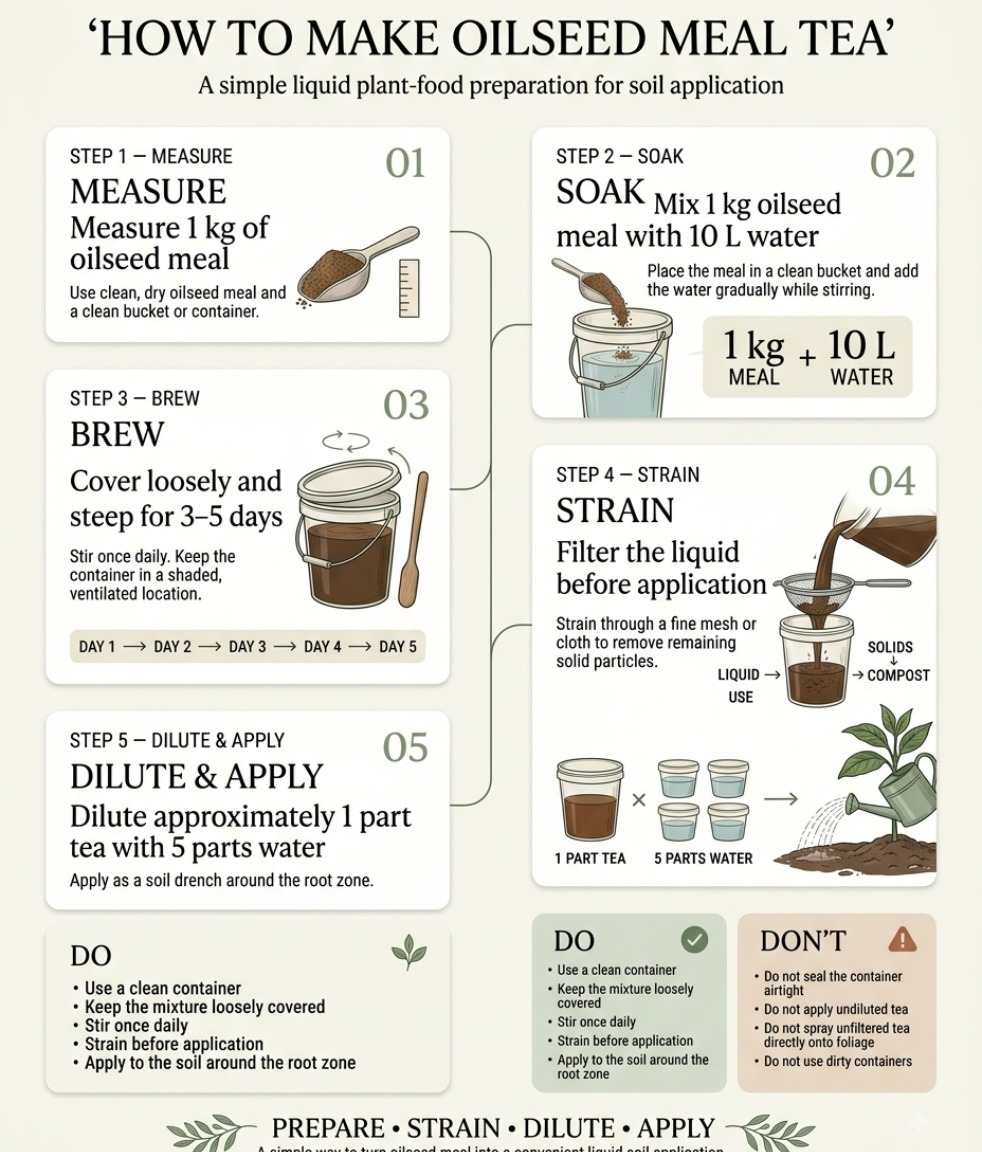
While it can be steeped in water to create a mild organic tea, direct soil application is recommended to gain the full soil-conditioning and pest-deterrent benefits.
8. Can I use Castor Seed Meal along with other organic fertilizers like vermicompost?
Yes. Combining castor seed meal with vermicompost or composted cow manure provides a balanced matrix of organic carbon, beneficial biology, and sustained nutrients.
9. Why is white mold forming on the soil after applying?
Faint white fungal hyphae appearing on top of the soil a few days after application is a normal sign of active microbial decomposition. Simply turn the top layer of soil gently into the ground.
10. Is Castor Seed Meal suitable for acid-loving or alkaline soils?
Castor seed meal is generally neutral in its soil reaction and can be safely used across acidic, neutral, and moderately alkaline soils to build organic matter.
Reviews
There are no reviews yet.