

PCS 42
Mula Series
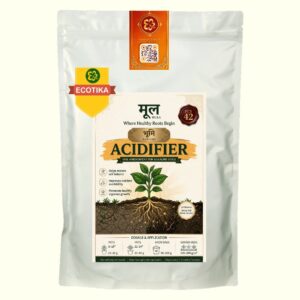
Soil Acidifier for Alkaline Soil | Soil pH Management | PCS-42 Ecotika
Soil acidifier for alkaline soil, designed to gradually lower high soil pH and support healthy root-zone conditions for acid-loving plants.
₹141.00 – ₹1,350.00Price range: ₹141.00 through ₹1,350.00
Short Description
Ecotika Soil Acidifier PCS-42 is a soil amendment designed to gradually lower soil pH and help manage excessively alkaline soil conditions. It is intended for situations where the existing soil or growing medium has a higher pH than is suitable for the crop being grown.
By supporting gradual soil acidification, PCS-42 can help create a more suitable root-zone environment for plants that prefer acidic or moderately acidic growing conditions. It is suitable for home gardens, containers, raised beds, grow bags, nurseries, landscaped areas and professional cultivation where soil pH management is required.
Primary benefits
- Helps gradually reduce excessively high soil pH
- Supports management of alkaline soil and growing media
- Helps improve the availability of certain nutrients when high pH is limiting their availability
- Supports growing conditions for acid-loving plants
- Suitable for both container and garden applications
- Designed for gradual, measured soil-pH management rather than sudden pH correction
- Can form part of a longer-term soil-management programme
Suitable for
PCS-42 may be considered for alkaline garden soil, high-pH growing media, container plants, raised beds, grow bags, nurseries, ornamental landscapes, acid-loving plants and selected fruit crops where soil testing indicates that pH reduction is appropriate.
Important: Soil pH should be tested before significant correction. The appropriate target is the pH range suitable for the particular crop, not simply the lowest possible soil pH.

Why Choose this product
Designed for controlled soil pH management
Soil pH is one of the factors that influences nutrient availability, root-zone conditions and plant performance. When soil becomes excessively alkaline, some nutrients can become less available to plants even when those nutrients are present in the soil.
PCS-42 is designed for growers who want a gradual and measured approach to soil pH management rather than attempting to make an abrupt change in soil chemistry.
Helps manage alkaline soil conditions
High soil pH can occur naturally or develop through factors such as soil characteristics, irrigation water, repeated amendment use and local growing conditions.
Where testing confirms that alkalinity is limiting the intended crop, gradual pH correction can form part of a broader soil-management programme.
Supports nutrient availability
Soil pH affects the chemical behaviour and availability of nutrients.
When soil pH is excessively high, the availability of certain micronutrients—including iron, zinc, manganese and copper—can become restricted.
Correcting an unsuitable pH can therefore help create conditions in which nutrients are more available to plant roots.
However, nutrient deficiency symptoms should not automatically be attributed to high soil pH. Root health, irrigation quality, nutrient supply, disease, growing conditions and other factors can produce similar symptoms.
Suitable for home gardens and professional cultivation
PCS-42 can be used as part of soil-management programmes for:
- Home gardens
- Container gardening
- Terrace and balcony gardens
- Raised beds
- Grow bags
- Nurseries
- Ornamental landscapes
- Fruit-growing systems
- Professional cultivation
- Soil reclamation and pH-management programmes
A gradual approach rather than an instant correction
Soil acidification is not an instantaneous process.
The response depends on the starting condition of the soil and factors including moisture, temperature, soil texture, microbial activity, organic matter and buffering capacity.
A gradual approach allows the grower to observe, test and adjust the soil over time rather than repeatedly applying large amounts without measuring the response.
Useful where soil pH matters
PCS-42 can be particularly relevant when growing plants whose performance depends on maintaining an appropriate acidic or moderately acidic root-zone environment.
This includes situations involving acid-loving ornamentals, selected fruit crops, blueberries and other plants with relatively low soil-pH requirements, provided the growing conditions and soil characteristics are suitable.
Product Desciption
What is Ecotika Soil Acidifier PCS-42?
Ecotika Soil Acidifier PCS-42 is a soil amendment for gradual management of excessively alkaline soil and high-pH growing media.
It belongs to Ecotika’s Mula Series — Living Foundation, a range focused on the underlying conditions that support healthy cultivation.
PCS-42 is intended for growers who need to manage soil pH as part of a broader cultivation programme.
The objective is not simply to make soil more acidic. The objective is to bring the soil closer to a pH range appropriate for the plant being grown.
Why does soil pH matter?
Soil pH influences many chemical and biological processes occurring around plant roots.
It affects:
- Nutrient availability
- Nutrient solubility
- Root-zone chemistry
- Microbial activity
- The effectiveness of certain soil amendments
- The ability of plants to access particular micronutrients
When soil becomes excessively alkaline, the availability of some micronutrients can decrease.
This can contribute to symptoms such as pale or yellowing new growth in susceptible plants.
However, yellow leaves do not by themselves prove that soil pH is too high.
Similar symptoms can result from:
- Nutrient deficiency
- Poor root development
- Water-quality problems
- Overwatering
- Poor drainage
- Root damage
- Disease
- Environmental stress
For this reason, soil testing is the appropriate starting point before undertaking significant pH correction.
What does a soil acidifier do?
A soil acidifier is used to gradually move soil or growing-media pH downward when the existing pH is higher than the appropriate range for the crop.
The rate of change is influenced by the characteristics of the soil and its surrounding environment.
This means that two gardens receiving the same amount of a soil acidifying amendment may not experience the same pH response.
How quickly does soil pH change?
Soil pH correction should generally be considered a process rather than an instant treatment.
The response can vary according to:
- Starting soil pH
- Desired soil pH
- Soil texture
- Soil organic matter
- Soil moisture
- Temperature
- Biological activity
- Irrigation-water chemistry
- Carbonate or free-lime content
- Soil buffering capacity
- Amount of soil being treated
This is why repeated application without retesting can result in unnecessary over-application.
What is alkaline soil?
Alkaline soil is soil with a relatively high pH.
The exact pH considered suitable or unsuitable depends on the plant.
Some plants tolerate or prefer alkaline conditions, while others perform better in acidic or moderately acidic soil.
Therefore, the presence of alkaline soil is not automatically a problem.
The relevant question is:
Is the existing soil pH appropriate for the crop being grown?
What happens when soil pH is too high?
When soil pH is excessively high for a particular crop, some nutrients may become less available.
This can affect plant growth even when the soil contains adequate quantities of those nutrients.
Plants growing in high-pH conditions may therefore show signs associated with restricted nutrient availability.
But correcting soil pH should be based on diagnosis rather than symptoms alone.
Soil acidifier for acid-loving plants
Many acid-loving plants perform best within a lower soil-pH range than plants adapted to neutral or alkaline soils.
PCS-42 may form part of a soil-management programme for plants such as:
- Blueberries
- Azaleas
- Rhododendrons
- Hydrangeas
- Camellias
- Gardenias
- Other acid-preferring ornamentals and crops
The appropriate soil pH varies between plants, cultivars and growing systems.
Do not assume that every acid-loving plant requires the same pH or the same quantity of amendment.
Soil acidifier for blueberries
Blueberries are particularly sensitive to unsuitable root-zone conditions and generally require acidic growing conditions.
PCS-42 can form part of a blueberry soil-management strategy where soil testing indicates that pH adjustment is required.
However, strongly alkaline or calcareous soils can resist pH reduction.
For such situations, establishing an appropriately acidic growing medium may be more practical than attempting to permanently alter a highly buffered native soil.
Soil acidifier for hydrangeas
Hydrangeas are commonly associated with soil-pH management because soil conditions can influence nutrient availability and, in some hydrangea types, flower colour.
PCS-42 may be used where soil testing indicates that soil pH requires adjustment.
Hydrangea flower colour, however, should not be attributed to soil pH alone, as plant variety, aluminium availability and other growing conditions can also influence the result.
Can soil acidification improve nutrient availability?
It can, when high soil pH is the factor restricting nutrient availability.
Lowering an excessively high soil pH can improve the availability of certain micronutrients.
However, acidification is not a universal solution for nutrient deficiency.
If a plant is deficient because of inadequate nutrient supply, damaged roots, poor drainage or another cause, changing soil pH alone may not resolve the problem.
Why soil testing matters
Soil pH correction should begin with information about the existing soil.
Ideally, the grower should know:
- Current soil pH
- Target pH for the crop
- Soil type or texture
- Whether the soil contains significant carbonate/free lime
- Irrigation-water characteristics
- General soil condition
The more strongly buffered the soil, the more resistant it may be to pH change.
A soil-test-based approach is therefore preferable to applying a fixed amount simply because a crop is known to prefer acidic conditions.
What makes soil pH difficult to change?
Some soils resist pH changes more strongly than others.
This is known as soil buffering capacity.
Soils with significant carbonate content can be particularly resistant to acidification.
Soil texture, organic matter and other chemical characteristics can also affect how much amendment is required to produce a measurable change.
This is why a universal soil-acidification dose is scientifically unreliable.
Is lower soil pH always better?
No.
Plants have different preferred pH ranges.
A soil that is suitable for one crop may be unsuitable for another.
Excessive acidification can also create nutrient-availability problems.
The objective of soil pH management should therefore be:
the appropriate pH for the crop — not simply a lower pH.
Problems this product helps address
PCS-42 is intended to support the management of soil and growing-media conditions where excessive alkalinity or high pH is identified as a limiting factor.
It may be relevant to:
- Excessively alkaline soil
- High soil pH
- Growing media with an unsuitable pH
- Poor availability of certain micronutrients associated with high soil pH
- Root-zone pH management
- Soil conditions unsuitable for acid-loving plants
- Growing blueberries and other acid-preferring crops
- Managing soil conditions for acid-loving ornamental plants
- Container growing media requiring gradual pH adjustment
- Raised beds and grow bags requiring pH management
- Nursery growing systems
- Long-term soil pH management programmes
- Soil reclamation where high pH has been confirmed as a problem
- Irrigation-related pH management situations where testing identifies an unsuitable root-zone pH
A useful distinction
PCS-42 should not be treated as a universal remedy for yellow leaves, poor growth or nutrient deficiency.
Those symptoms can have many causes.
Where high soil pH is suspected, soil testing should precede significant pH correction.
Application method and dosage
How to apply Ecotika Soil Acidifier PCS-42
PCS-42 is intended for gradual soil-pH management in alkaline or high-pH growing conditions. Apply it evenly to the target root-zone area and incorporate it into the upper soil or growing medium. Water thoroughly after application.
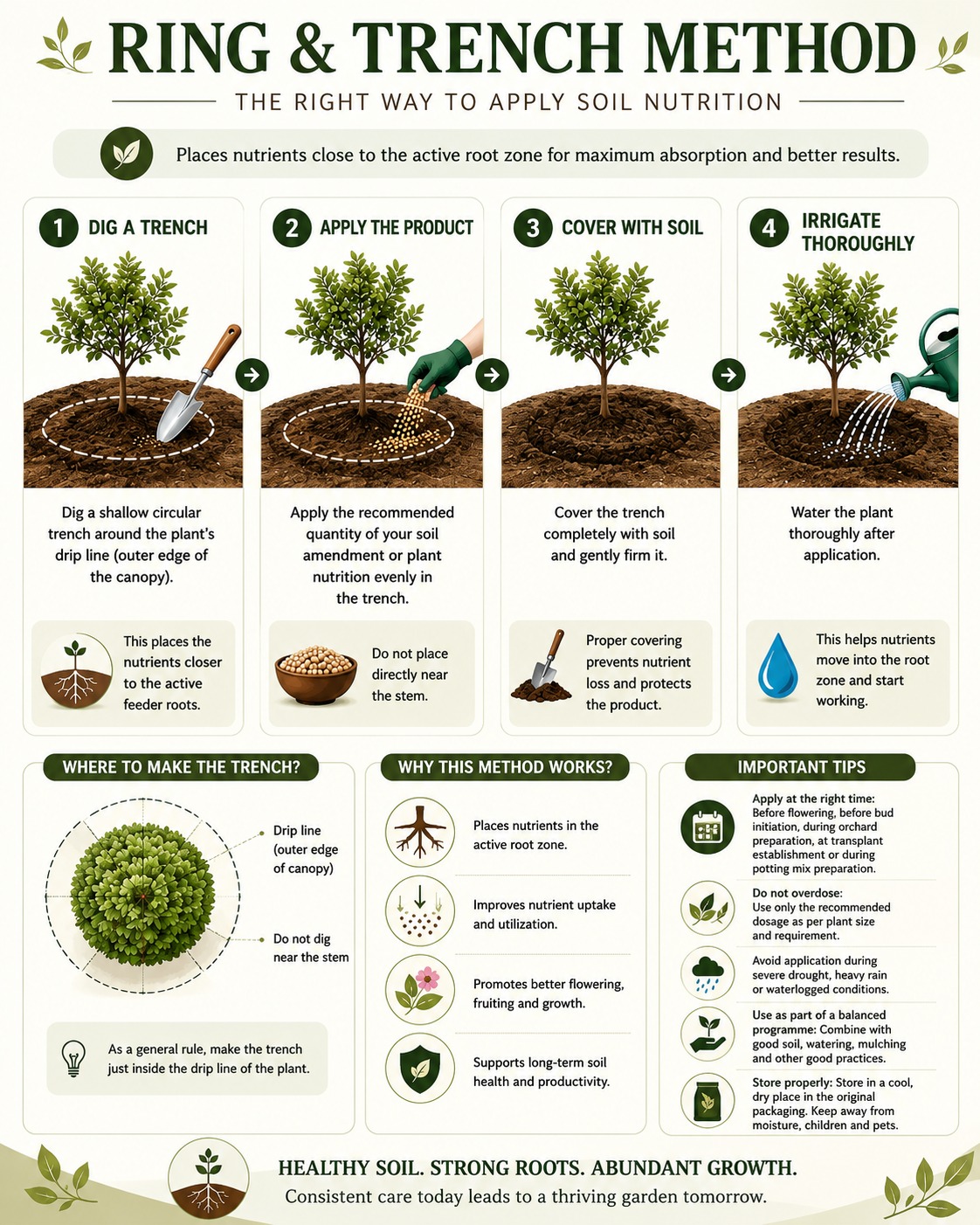
For established plants, the ring or trench method can be used to place the amendment around the active root zone while avoiding direct concentration immediately against the plant stem.
Recommended dosage
| Application | Dosage |
|---|---|
| 6–10 inch pots | 15–20 g per pot |
| 12–14 inch pots | 25–40 g per pot |
| Large grow bags | 50–100 g per grow bag |
| Garden beds | 100–200 g/m² |
Dosage shown above is a practical starting guideline. Actual requirement can vary according to existing soil pH, soil type, moisture, temperature, water quality, buffering capacity and the crop being grown. Where significant pH correction is intended, test the soil before application and monitor the pH response before repeating the treatment. Soil-acidifying amendments generally act gradually rather than producing an immediate pH change.
Ring Method — For Established Plants
- Measure the recommended quantity according to the plant or container size.
- Make a shallow circular ring around the plant, keeping the material away from direct contact with the stem or trunk.
- Spread PCS-42 evenly around the ring.
- Gently mix it into the upper layer of soil.
- Water thoroughly after application.
The ring should be positioned within the plant’s active root zone rather than immediately against the stem.
Trench Method — For Established Plants
The trench method is useful where a more defined root-zone application is required.
- Create a shallow circular or segmented trench around the established plant.
- Keep the trench outside the immediate stem/trunk area.
- Distribute the recommended quantity evenly through the trench.
- Mix with the excavated soil.
- Return the amended soil and water thoroughly.
For substantial soil-pH correction, incorporation into the soil generally provides more effective contact than simply leaving an amendment on the surface.
Preparing an Acidified Soil Additive
PCS-42 can also be incorporated into mature compost to prepare a soil-conditioning blend for subsequent use.
10% PCS-42 + 90% compost
Prepare the blend at:
10 parts PCS-42 + 90 parts mature, well-decomposed compost
For example:
- 1 kg PCS-42 + 9 kg compost = 10 kg blend
- 500 g PCS-42 + 4.5 kg compost = 5 kg blend
- 100 g PCS-42 + 900 g compost = 1 kg blend
Mix thoroughly and uniformly so that PCS-42 is distributed throughout the compost rather than concentrated in one area.
This prepared material can be used as an acidifying soil additive where gradual pH management is appropriate.
Because compost itself can have a variable pH and buffering capacity, the final blend should not be assumed to produce a particular soil pH without testing.
Preparing an Acidified Potting Mix
For preparing a potting/growing-medium blend:
10% PCS-42 + 90% suitable mature compost or compost-based growing medium
Mix thoroughly before filling containers.
The resulting blend should be treated as a prepared soil/growing-medium additive, not as a guaranteed target-pH potting mix. The final pH depends on the characteristics of the compost/growing medium and other components used.
For sensitive crops such as blueberries and other acid-preferring plants, check the growing medium’s pH and adjust the formulation as necessary rather than assuming that the 10:90 ratio will produce the same pH in every batch.
Application reminders
- Mix uniformly into the topsoil or growing medium.
- Water thoroughly after application.
- Avoid concentrating the amendment directly against stems or trunks.
- Do not repeatedly apply additional material simply because the pH has not changed immediately.
- Retest soil or growing-medium pH before substantial repeat applications.
- For strongly calcareous or highly buffered soils, substantial pH reduction may be difficult and may require a different cultivation strategy.
- The label’s 2–3 month repeat interval should be treated as a conditional interval: repeat only where required and after evaluating the soil/plant response.
FAQ(s)
1. What is Ecotika Soil Acidifier PCS-42 used for?
Ecotika Soil Acidifier PCS-42 is used to help gradually lower soil pH when soil or growing-media testing indicates that the existing pH is excessively high for the intended crop.
2. What is a soil acidifier?
A soil acidifier is a soil amendment used to gradually reduce soil pH when the growing medium is more alkaline than appropriate for the crop being cultivated.
3. Can a soil acidifier lower alkaline soil pH?
Yes. A suitable soil acidification programme can gradually lower excessively high soil pH. The rate and extent of change depend on the starting pH, soil characteristics, buffering capacity and environmental conditions.
4. Is PCS-42 suitable for alkaline soil?
Yes. PCS-42 is intended for managing excessively alkaline soil and high-pH growing media when testing confirms that pH reduction is appropriate for the crop.
5. Can I use PCS-42 for plants that prefer acidic soil?
Yes. PCS-42 can form part of a soil-management programme for acid-preferring plants when the existing growing medium has an unsuitable pH.
6. Can I use PCS-42 for blueberries?
PCS-42 can be part of a soil-pH management programme for blueberries. Because blueberries require acidic growing conditions, the existing soil pH, soil type and buffering capacity should be considered before application.
7. Can I use PCS-42 for hydrangeas?
Yes, where soil testing indicates that pH adjustment is appropriate. Hydrangea response can depend on variety and other soil factors, so pH should be managed according to the specific growing objective.
8. Can I use a soil acidifier in pots?
Yes. Soil acidifiers can be used in containers, but container applications require greater care because a pot contains a relatively small volume of growing media. Application should be calibrated to the container and growing medium rather than simply transferring field rates to pots.
9. Can PCS-42 be used in grow bags?
Yes. PCS-42 can be incorporated into a grow-bag soil-management programme where testing indicates that pH reduction is required.
10. How long does a soil acidifier take to work?
Soil acidification is generally gradual rather than instantaneous. The response depends on soil temperature, moisture, microbial activity, soil characteristics, starting pH and buffering capacity.
11. Will PCS-42 immediately lower soil pH?
No. Soil pH correction should be treated as a gradual process. Retesting the soil after allowing sufficient time for the amendment to react is preferable to repeatedly applying additional material too quickly.
12. Can soil acidifier fix yellow leaves?
Not necessarily. Yellow leaves can result from high soil pH, but they can also be caused by nutrient deficiency, root problems, poor drainage, irrigation issues, pests, disease and environmental stress. Soil testing and plant diagnosis should come first.
13. Does high soil pH affect nutrient availability?
Yes. Excessively high soil pH can reduce the availability of certain nutrients, particularly some micronutrients. Correcting an unsuitable pH may improve nutrient availability where high pH is the limiting factor.
14. How do I know if my soil is too alkaline?
A soil pH test is the starting point. Whether a soil is “too alkaline” depends on the crop being grown and its preferred pH range.
15. Can I use PCS-42 without testing my soil?
For minor routine gardening situations, growers may use general application guidance, but soil testing is strongly recommended before undertaking significant pH correction. The correct amount depends on the existing soil conditions and the desired target pH.
16. Can soil acidifier be used on all plants?
No. Different plants have different preferred soil-pH ranges. Soil acidification should only be undertaken when the crop and existing soil conditions justify it.
17. Does acidic soil mean healthier soil?
No. Plants require different soil-pH conditions. Both excessively high and excessively low pH can create problems. The objective is to maintain a pH appropriate for the crop.
18. Will soil acidifier work in calcareous soil?
It can be difficult to significantly reduce pH in strongly calcareous soils because carbonate content can provide substantial buffering against acidification. Such soils may require a different long-term cultivation strategy.
19. Can hard irrigation water affect soil pH?
Yes. Irrigation-water chemistry can influence soil and growing-media pH over time. Water quality should therefore be considered when managing persistent pH problems.
20. Can I apply soil acidifier every month?
A fixed monthly application should not be treated as a universal programme. Soil acidification should be based on the soil’s response, crop requirements and appropriate retesting rather than an automatic calendar schedule.
21. Can I use PCS-42 with other soil amendments?
Potentially, but compatibility and the overall soil-management objective should be considered. Avoid combining multiple amendments simply because each is marketed for soil improvement or pH management.
22. Should soil acidifier be applied before planting?
For substantial pH correction, incorporating an amendment sufficiently before planting can allow more time for the soil-management process to develop. The appropriate timing depends on the crop, soil and cultivation system.
23. Can soil acidifier permanently change soil pH?
Not necessarily. Soil pH can change again because of the soil’s buffering capacity, irrigation-water chemistry, amendments, crop removal and other environmental factors. Long-term pH management may therefore require monitoring and periodic adjustment.
24. What soil pH is best for plants?
There is no single ideal soil pH for every plant. Different crops and ornamentals have different preferred ranges, so the target should be selected according to the specific crop.
25. Is PCS-42 a fertilizer?
PCS-42 is positioned as a soil amendment for soil-pH management. Its purpose on the product page is to address unsuitable soil conditions rather than to present it as a general-purpose plant food.
24 reviews for Soil Acidifier for Alkaline Soil | Soil pH Management | PCS-42 Ecotika
Recommended companion protocols
You may also like…
-
 Sale!
Sale!
Blueberry Sutra (Siddhi) PCS-10 | Blueberry Plant Nutrition for Established Plants | Ecotika
₹141.00 – ₹1,350.00Price range: ₹141.00 through ₹1,350.00 Sale! Select options Select options This product has multiple variants. The options may be chosen on the product page Buy now -
 Sale!
Sale!
Blueberry Sutra (Aadya) PCS-51 | Acid-Loving Starter Fertilizer for Potted Blueberries | Ecotika
₹141.00 – ₹1,350.00Price range: ₹141.00 through ₹1,350.00 Sale! Select options Select options This product has multiple variants. The options may be chosen on the product page Buy now -
 Sale!
Sale!
Acid Adoring PCS-04 | Plant Nutrition for Acid-Loving Plants | Ecotika
₹141.00 – ₹325.00Price range: ₹141.00 through ₹325.00 Sale! Select options Select options This product has multiple variants. The options may be chosen on the product page Buy now -
 Sale!
Sale!
Rock Phosphate PCS-24 | Powdered Rock Phosphate | Ecotika
₹165.00 – ₹350.00Price range: ₹165.00 through ₹350.00 Sale! Select options Select options This product has multiple variants. The options may be chosen on the product page Buy now
Vikram Thakur — Shimla, Himachal Pradesh –
I was struggling to keep my blueberry plants happy because the soil on our farm was naturally on the alkaline side. After testing the soil and adjusting the pH with PCS-42, the plants started responding much better. For serious blueberry growing, managing the soil is just as important as feeding the plant.
Ramesh Sharma — Jaipur, Rajasthan –
My garden soil is quite hard and alkaline, and some plants were constantly showing poor growth. I started using this along with compost and noticed that the soil became easier to work with. The improvement was gradual, which I actually prefer with soil amendments.
Ananya Menon — Bengaluru, Karnataka –
Bought this mainly for my hydrangeas. I had tried several approaches before but never paid enough attention to soil pH. This made me understand that the problem was actually below the surface. Very useful product for anyone growing acid-loving plants.
Harshad Patel — Ahmedabad, Gujarat –
My soil is quite alkaline and I was getting disappointing growth despite regular feeding. I used PCS-42 as part of my soil management and the plants have been looking considerably healthier. It is not a magic overnight solution, but it works well when used properly.
Neeraj Rawat — Dehradun, Uttarakhand –
Growing blueberries in containers sounded easy until I actually started doing it. The biggest lesson was pH. PCS-42 has become part of my blueberry routine. I test the soil regularly and use the product when required. Much better approach than blindly adding more nutrients.
Sneha Kulkarni — Pune, Maharashtra –
I purchased this after noticing that some of my acid-loving plants were struggling while other plants were doing fine. The product is easy to incorporate into the soil. Results were gradual but noticeable over subsequent weeks.
Daniel Lyngdoh — Shillong, Meghalaya –
For blueberry cultivation, soil pH is not something you can ignore. We were having difficulty maintaining the desired acidic environment. PCS-42 has been useful in our soil-management programme. I particularly like that the approach is gradual rather than trying to change the soil dramatically in one application.
Amit Verma — Lucknow, Uttar Pradesh –
Our garden soil is alkaline and quite compact. I bought this primarily for a few acid-loving plants but also noticed that the soil became easier to manage when used along with organic matter. Good product, but you need patience and should monitor your soil instead of over-applying.
Sohini Banerjee — Kolkata, West Bengal –
My orchids were not looking their best and I eventually realised that I had been concentrating too much on fertilising and too little on the root environment. I started paying attention to pH and incorporated PCS-42 into my soil-management routine. Much better overall plant response.
Prashant Joshi — Nagpur, Maharashtra –
Very useful for anyone whose water and soil are both working against acid-loving plants. I mainly use it for container plants. The effect isn’t immediate, but that’s actually a good thing with pH correction. Happy with the purchase.
Karthik Raman — Ooty, Tamil Nadu –
I grow blueberries as a hobby and maintaining the right root-zone conditions has been the biggest challenge. PCS-42 has been helpful in keeping the growing medium in the acidic range. I would recommend testing pH rather than applying blindly, but the product itself has worked well for me.
Rohit Bhatia — Gurugram, Haryana –
Delhi NCR water and soil can make gardening difficult for certain plants. My blueberries and hydrangeas were struggling despite regular care. After introducing soil pH management into the routine, the plants started doing better. PCS-42 is now one of the products I keep around.
Rajendra Singh — Indore, Madhya Pradesh –
I originally bought this because my hydrangeas were disappointing. After checking the soil, the pH explained a lot. Started using PCS-42 carefully and the plants have improved. The important thing is understanding that soil correction takes time.
Mahesh Patil — Nashik, Maharashtra –
We deal with several different ornamental plants, and pH management becomes important when growing acid-loving varieties. PCS-42 has performed consistently in our growing media. I appreciate that Ecotika provides a product specifically focused on soil pH rather than trying to make one product do everything.
Dhruv Shah — Surat, Gujarat –
I had almost given up on some acid-loving plants. They would grow for some time and then become pale and weak. Soil testing showed the pH was too high. Started using PCS-42 with better watering and organic matter management. The improvement has been encouraging.
Tashi Negi — Manali, Himachal Pradesh –
We use soil testing as part of our cultivation process, so I was specifically looking for something to help manage alkaline conditions. PCS-42 has been useful in our programme, especially around acid-loving crops. Consistent results when application is based on actual soil conditions.
Rhea Fernandes — Mumbai, Maharashtra –
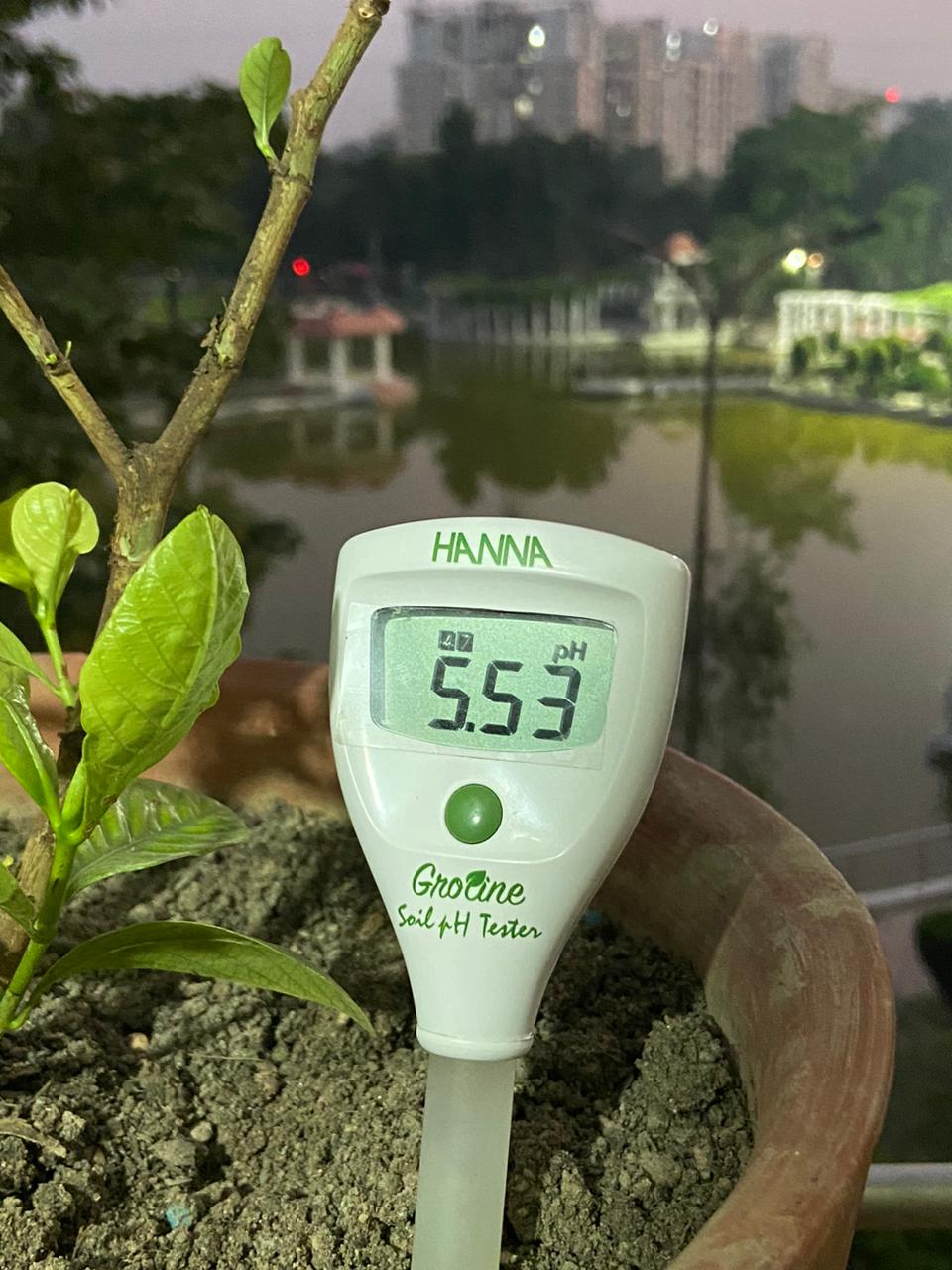
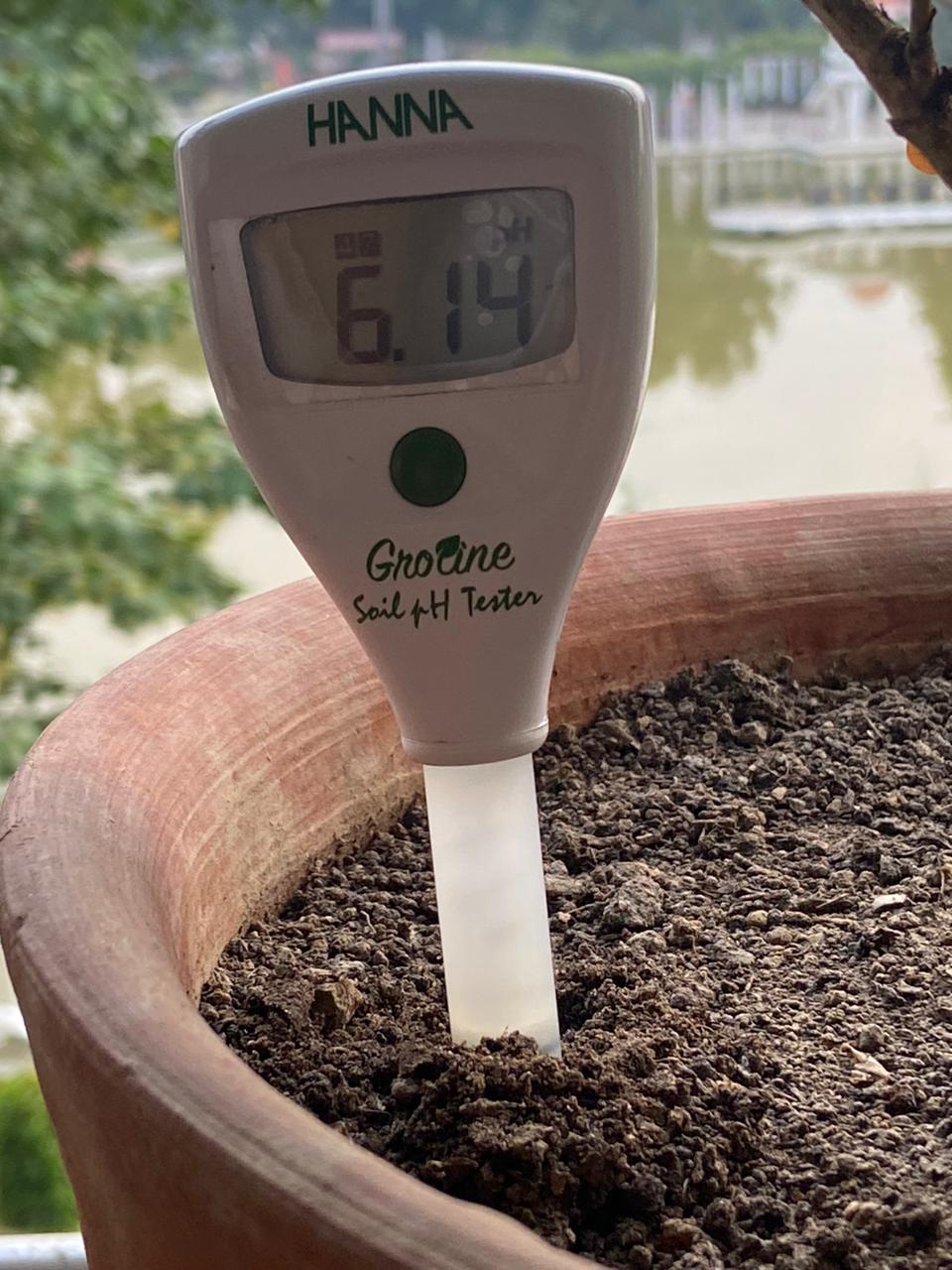
I grow a few unusual plants on my balcony and the biggest issue has always been the growing medium. Bought this after learning about pH. It has helped, although I would strongly suggest buying a decent pH meter along with any soil acidifier.
Gurpreet Singh — Chandigarh, Punjab –
My blueberry plants were alive but never really thriving. The soil test showed a much higher pH than blueberries prefer. PCS-42 became part of my correction routine and the plants are now growing much more strongly. Very useful product if you understand what you are trying to correct.
Srinivas Rao — Hyderabad, Telangana –
Good product for people dealing with alkaline soil. I mainly use it around my acid-loving ornamentals. The results are not instant, but soil pH is not something that should be changed aggressively anyway. Overall satisfied.
Nidhi Saxena — Bhopal, Madhya Pradesh –
I initially purchased this for hydrangeas but have since started using it as part of my broader soil-management routine. What I like most is that it encourages you to think about the soil rather than simply adding more plant food whenever something looks wrong.
Manoj Kumar — Patna, Bihar –
My soil was becoming increasingly alkaline and several plants were showing nutrient-related symptoms even though I was feeding regularly. Once I started managing the pH, the situation improved. PCS-42 has been a useful part of that correction.
Pema Tamang — Kalimpong, West Bengal –
We grow blueberries in an area naturally more suited to acidic conditions, but maintaining the root-zone environment is still important. PCS-42 has given us another tool for keeping the growing medium where we want it. Good professional product.
Rakesh Choudhary — Jodhpur, Rajasthan –
This is probably one of those products you don’t appreciate until you have alkaline soil. I spent months trying different nutrients and wondering why certain plants weren’t responding. Once I started looking at pH, everything made more sense. PCS-42 has been useful, particularly for my acid-loving plants.
Arjun Nair — Bengaluru, Karnataka –
The product itself seems good, but I expected the pH to change much faster than it did. I probably applied it with unrealistic expectations. After learning more about gradual soil correction, I understand the process better, but I would have liked clearer guidance for beginners.