

PCS 4
Kalpa Series
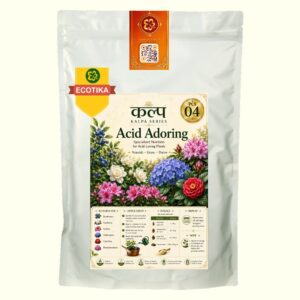
Acid Adoring PCS-04 | Plant Nutrition for Acid-Loving Plants | Ecotika
Purpose-designed nutrition for healthy growth of acid-loving and acid-preferring plants.
₹141.00 – ₹325.00Price range: ₹141.00 through ₹325.00
Short Description
Acid Adoring is a purpose-designed Plant Care Solution for acid-loving and acid-preferring plants, providing targeted nutritional support for plants that perform best in a more acidic root-zone environment.
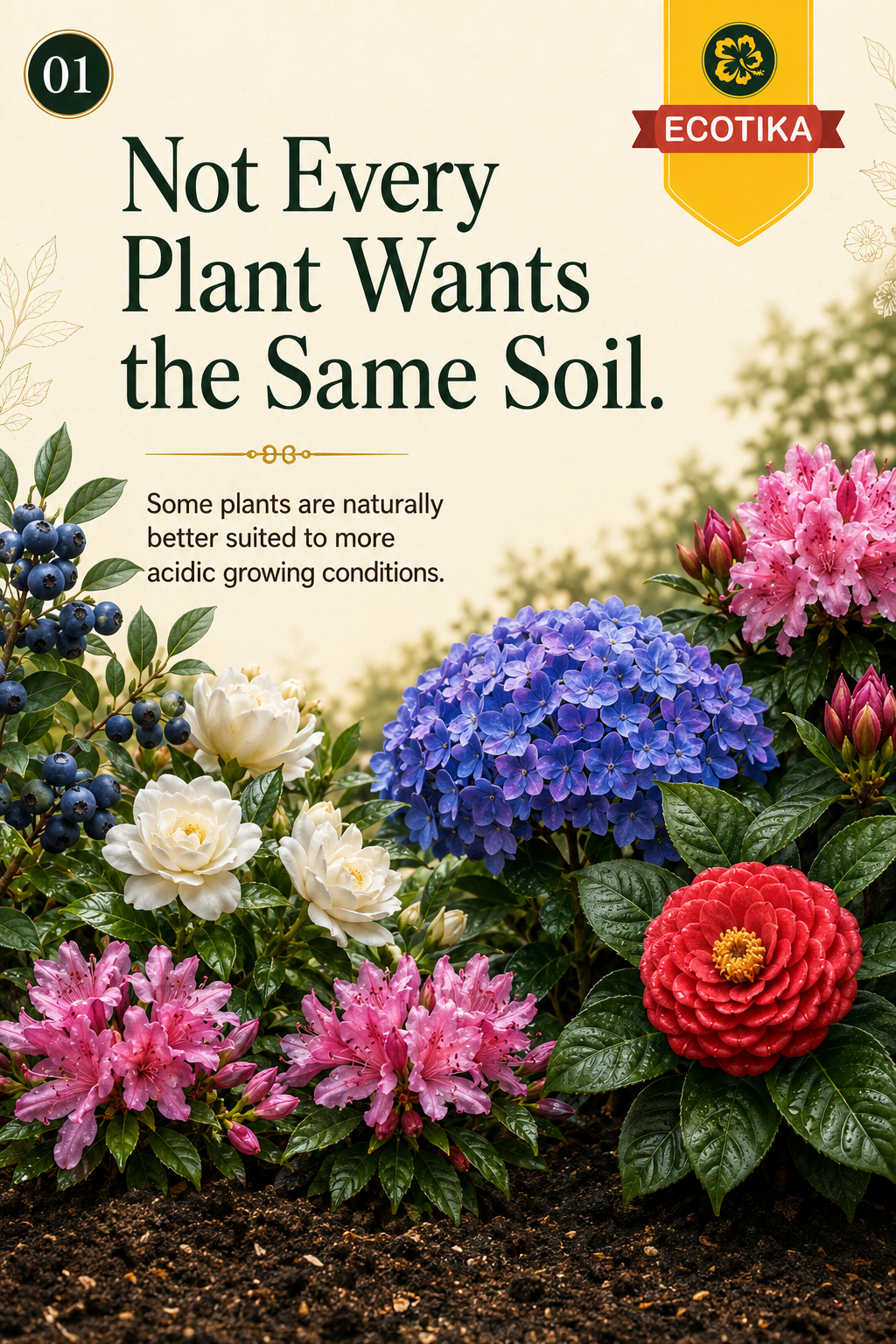
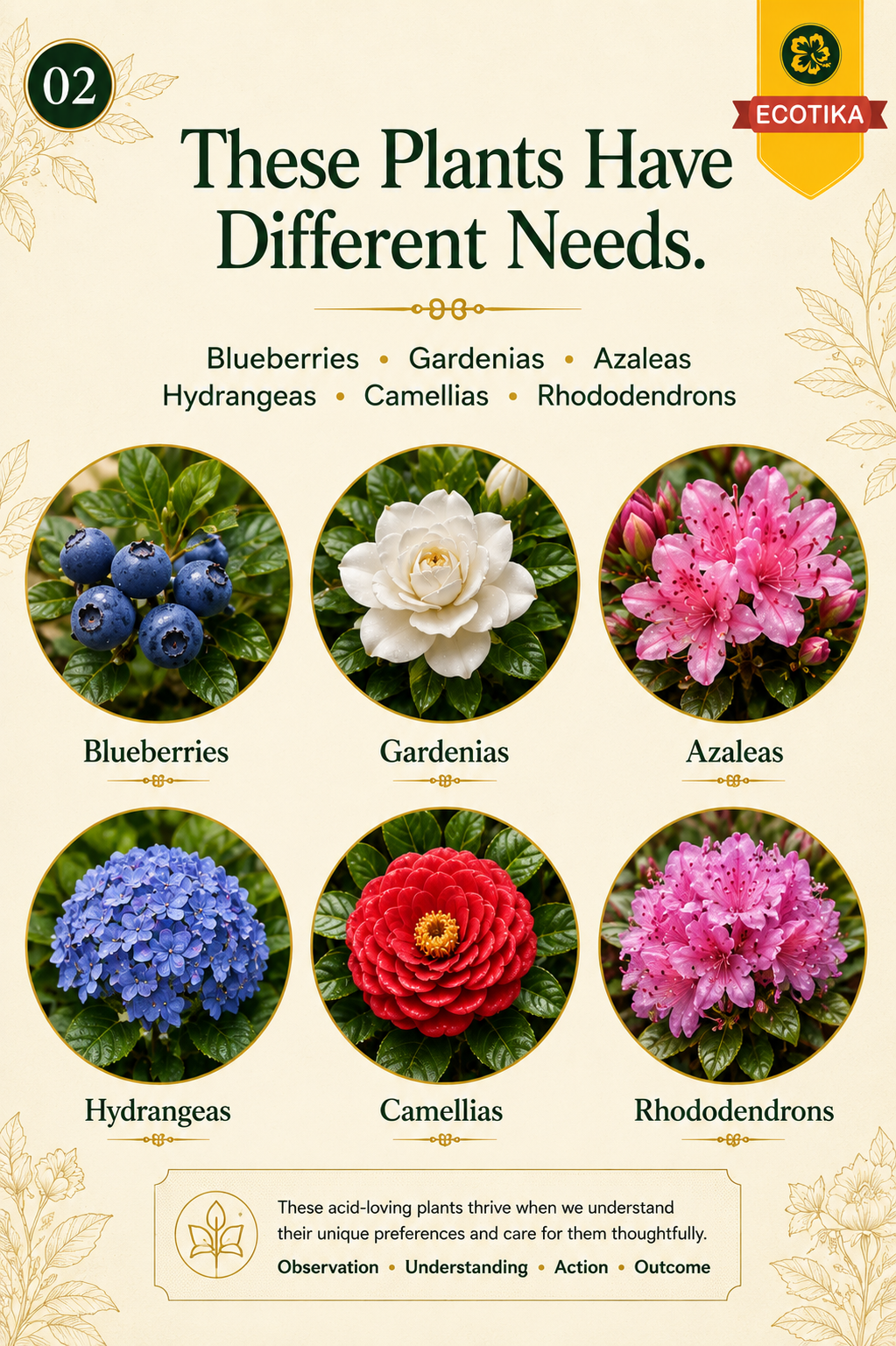
It is particularly suited to gardeners growing plants such as azaleas, rhododendrons, gardenias, camellias, blueberries and other acid-preferring ornamentals and fruiting plants.
Best suited for: Acid-loving and acid-preferring plants
Primary uses: Nutritional support and maintenance of healthy growth in suitable acidic growing conditions
Suitable for: Pots, containers, balconies, terraces, gardens and specialized plant collections
Dosage Chart
Growing Environment Pot / Plant Spec Dosage per Application (Grams) Approximate Visual Equivalent Small Pot 6?8 inch diameter 5 ? 8 g ~1 tsp Medium Pot 10?12 inch diameter 12 ? 15 g ~1 tbsp Large Pot 14?16 inch diameter 20 ? 25 g ~1.5 to 2 tbsp
Why Choose this product
Many plants do not perform equally well across the full range of soil pH.
Acid-preferring plants generally perform best when the root-zone pH is maintained within an appropriately acidic range. When the growing medium becomes too alkaline, certain nutrients can become less available to the plant even when those nutrients are physically present in the soil.
Acid Adoring is designed specifically for this category of plants rather than functioning as a generic plant nutrition product.
Designed for acid-loving plants
Suitable plants can include:
- Azalea
- Rhododendron
- Gardenia
- Camellia
- Blueberry
- Cranberry
- Pieris
- Hydrangea cultivars that prefer acidic conditions
- Other acid-preferring ornamental and fruiting plants
The exact pH preference varies by species and cultivar.
Supports nutritional availability
Root-zone pH strongly influences nutrient availability. Maintaining a suitable pH can help acid-preferring plants access nutrients more effectively.
Acid Adoring provides nutritional support within a programme designed around the needs of these plants.
Useful where ordinary plant nutrition is not enough
A plant can receive adequate nutrients yet still show poor growth if the root-zone environment is unsuitable.
For acid-preferring plants, pH, irrigation-water chemistry and growing-medium composition should therefore be considered alongside nutrition.
Product Desciption
Acid Adoring is designed for gardeners growing plants that naturally prefer acidic growing conditions.
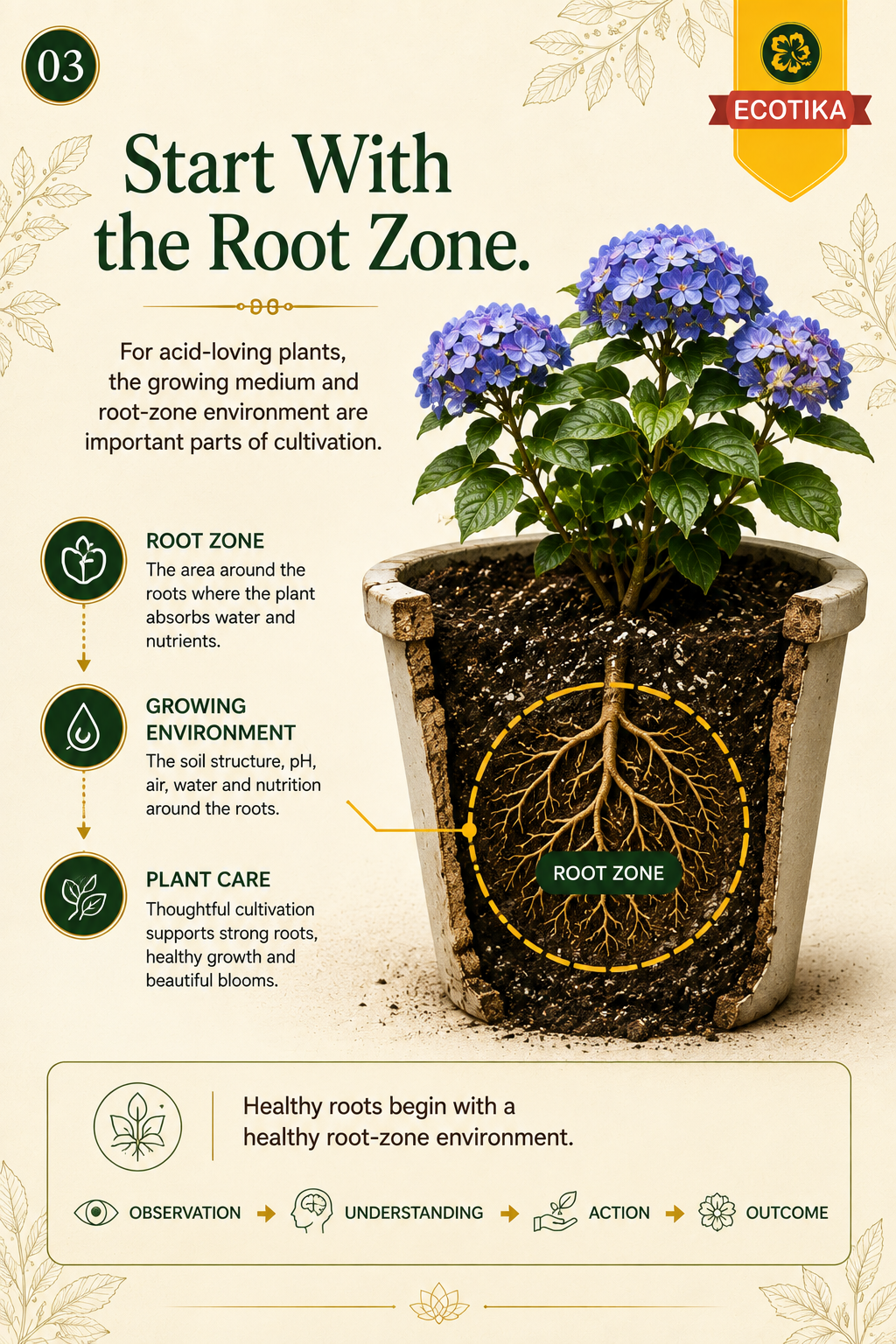
Why root-zone pH matters
Soil pH affects the chemical form, solubility and availability of many plant nutrients.
When an acid-preferring plant is grown in an excessively alkaline medium, micronutrients such as iron can become less available. This can contribute to symptoms such as chlorosis and weak growth.
However, yellow leaves do not automatically mean that a plant needs an acidic product. Root damage, watering problems, nutrient imbalance and other environmental factors can produce similar symptoms.
Supporting healthy foliage
Healthy foliage is particularly important for plants growing actively, because leaves provide the photosynthetic capacity required for continued development.
Acid Adoring is intended to provide nutritional support while the gardener maintains an appropriate root-zone environment.
Supporting acid-preferring fruit plants
Some fruiting plants, particularly blueberries, have specific acidic soil requirements.
For such plants, maintaining the appropriate root-zone pH is often more important than simply increasing nutrient application.
Acid Adoring can form part of a structured nutrition programme, provided the growing medium and irrigation water are also managed appropriately.
Suitable for container cultivation
Container-grown acid-loving plants can be particularly sensitive to irrigation-water chemistry because repeated watering can gradually alter the growing-medium environment.
For container plants, monitor:
- Growing-medium pH
- Irrigation-water pH
- Irrigation-water alkalinity
- Drainage
- Root-zone EC
- Nutritional history
This is especially important where the source water is alkaline or has significant bicarbonate/carbonate alkalinity.
Problems this product helps address
Acid Adoring is intended to support acid-preferring plants experiencing nutritional-management challenges associated with:
- Unsuitable nutrition for acid-loving plants
- Poor growth where root-zone chemistry is a contributing factor
- Nutritional management of acid-preferring ornamentals
- Nutritional management of acid-preferring fruit plants
- Container cultivation of acid-loving plants
- Maintaining a suitable nutritional programme alongside acidic growing media
Before applying
For an acid-loving plant showing poor growth, check:
Root-zone pH → Water alkalinity → Drainage → Root health → EC → Light → Watering → Nutrition
This is particularly important for blueberries, gardenias and other plants with relatively narrow root-zone preferences.
Acid Adoring is not a pesticide, disease treatment or guaranteed chlorosis cure.
Application method and dosage
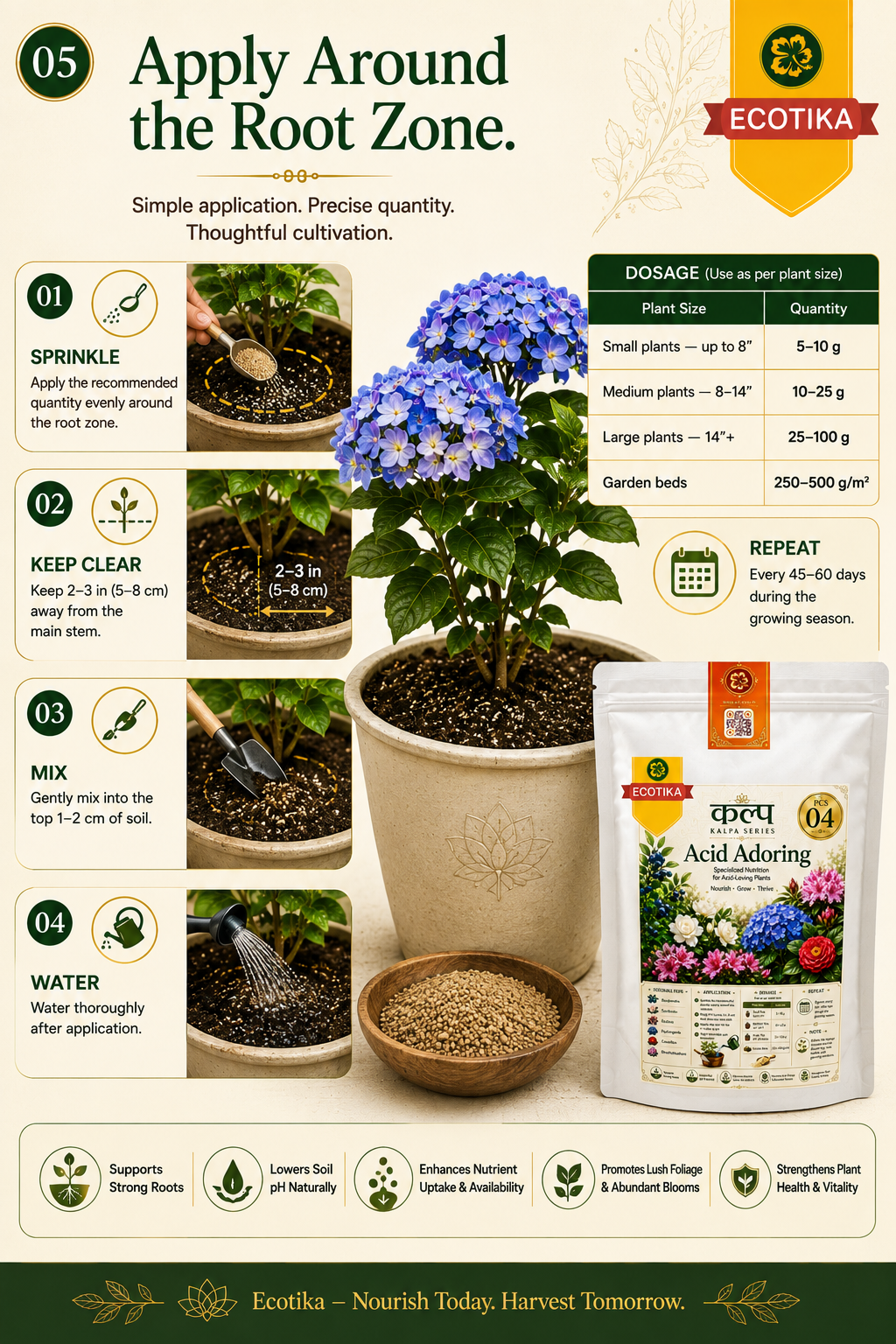
1. Dosage Chart
| Growing Environment | Pot / Plant Spec | Dosage per Application (Grams) | Approximate Visual Equivalent |
| Small Pot | 6–8 inch diameter | 5 – 8 g | ~1 tsp |
| Medium Pot | 10–12 inch diameter | 12 – 15 g | ~1 tbsp |
| Large Pot | 14–16 inch diameter | 20 – 25 g | ~1.5 to 2 tbsp |
| Extra Large / Tub | 18+ inch diameter | 35 – 45 g | ~2.5 to 3 tbsp |
| In-Ground Bed | Small Acid-Loving Shrub / Young Bush | 30 – 40 g | ~2 to 2.5 tbsp |
| In-Ground Bed | Established Bush / Medium Specimen | 60 – 80 g | ~1/4 to 1/3 cup |
| In-Ground Bed | Large Acid-Loving Shrub / Tree Canopy | 100 – 150 g | ~1/2 to 3/4 cup |
2. Application Frequency & Seasonal Schedule
-
Active Growth & Vegetative Flush (Early Spring to Mid-Summer): Apply every 20 to 30 days to cater to high nitrogen and sulfur demand while maintaining ideal rhizosphere acidity.
-
Bud Initiation & Bloom Phase: Apply every 25 to 30 days to support strong flower development via bioavailable potassium and phosphorus.
-
Monsoon / Rainy Season: Apply every 20 to 25 days to replenish nitrogen and sulfur lost through soil leaching.
-
Dormancy / Winter Phase: Suspend applications completely or extend to once every 60 days during dormant periods to avoid excessive salt accumulation and premature flushes.
3. Best Practices for Soil Application
-
Light Topsoil Loosening (Godi): Gently aerate the top 1 inch of soil, exercising extreme caution near acid-loving plants (like Ixora, Hydrangeas, Gardenias, or Camellias) which often have shallow feeder roots.
-
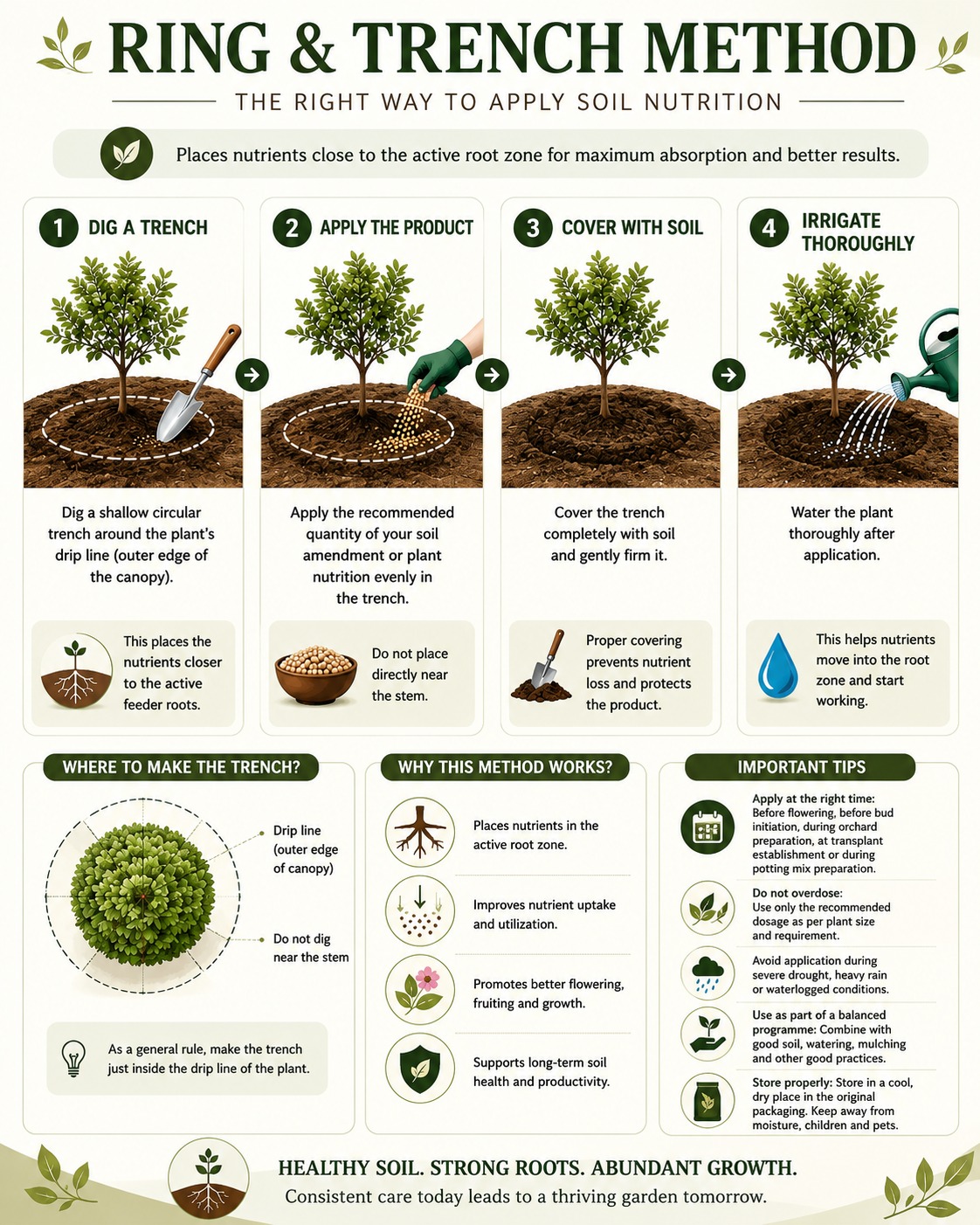
Ring Application around Drip Line: Scatter the granular blend evenly along the outer periphery of the root zone, keeping a clear gap of 2–3 inches from the central stem.
-
Soil Incorporation: Gently mix into the topsoil to allow organic meals (Neem and Castor) to decompose microbially alongside acidifying elements (Ammonium Sulphate).
-
Immediate Deep Irrigation: Water thoroughly after application to prevent root scorch.
FAQ(s)
1. What is Acid Adoring used for?
Acid Adoring is a specialized Plant Care Solution designed to provide nutritional support for acid-loving and acid-preferring plants.
2. Which plants can I use Acid Adoring on?
It can be used for suitable acid-preferring plants such as azaleas, rhododendrons, gardenias, camellias, blueberries and similar plants.
3. Is Acid Adoring suitable for blueberries?
Yes. Blueberries are strongly acid-preferring plants and can benefit from a properly managed acidic root-zone environment.
4. Can I use it for gardenias?
Yes. Gardenias generally prefer acidic growing conditions, making them an appropriate plant category for Acid Adoring.
5. Can I use it for roses?
Roses generally prefer a slightly acidic to near-neutral root-zone environment rather than the strongly acidic conditions required by plants such as blueberries. Acid Adoring is therefore not the first-choice Ecotika solution for roses.
6. Does Acid Adoring lower soil pH?
Its use is intended for acid-preferring plant nutrition, but the degree to which any product changes root-zone pH depends on the growing medium, buffering capacity, irrigation-water alkalinity and application rate.
Do not assume a fixed pH reduction without testing.
7. Can I use Acid Adoring if my soil is alkaline?
It may form part of an appropriate management programme, but the cause and degree of alkalinity should first be understood. Strongly alkaline soil may require a broader soil-management strategy.
8. Why are the leaves of my acid-loving plant turning yellow?
Yellowing can result from several causes, including unsuitable pH, iron or other nutrient availability issues, root problems, excessive watering, poor drainage or environmental stress.
Do not diagnose the cause from leaf colour alone.
9. Can I use Acid Adoring with acidic potting mix?
Yes, but monitor the overall nutritional programme. If the growing medium is already appropriately acidic and nutritionally rich, additional applications may not be necessary.
10. Can I use it in pots?
Yes. It is particularly useful to consider pH and water chemistry when managing acid-preferring plants in containers.
11. Can I use it with rainwater?
Yes. Rainwater is often lower in alkalinity than many groundwater sources, although actual water chemistry varies. Adjust the overall programme according to the water being used.
12. What if my irrigation water is hard or alkaline?
Water alkalinity can gradually increase the pH of the growing medium. In such cases, managing the irrigation-water chemistry may be as important as selecting an appropriate plant nutrition product.
13. Can I apply more if the leaves are yellow?
No. Yellowing does not automatically indicate that more nutrition is required. Excessive application can create additional root-zone problems.
14. Can Acid Adoring replace an iron product?
Not necessarily. If a plant has confirmed iron deficiency, the appropriate corrective strategy depends on the cause of the deficiency and the root-zone conditions.
15. How quickly will I see improvement?
Response depends on the cause of the problem, root health, pH, irrigation-water quality, plant species, season and growing conditions. Correcting the underlying root-zone problem is more important than expecting an immediate response from additional nutrition.
Recommended companion protocols
You may also like…
-
 Sale!
Sale!
Magical Monstera PCS-17 | Premium Tropical Foliage Plant Food | Ecotika
₹141.00 – ₹350.00Price range: ₹141.00 through ₹350.00 Sale! Select options Select options This product has multiple variants. The options may be chosen on the product page Buy now -
 Sale!
Sale!
PCS-05 Adenium Plant Care Solution | Desert Rose Care for Growth, Caudex & Flowering
₹141.00 – ₹350.00Price range: ₹141.00 through ₹350.00 Sale! Select options Select options This product has multiple variants. The options may be chosen on the product page Buy now -
 Sale!
Sale!
Blooming Rose PCS-09 | Rose Plant Food for Flowering | Ecotika
₹141.00 – ₹350.00Price range: ₹141.00 through ₹350.00 Sale! Select options Select options This product has multiple variants. The options may be chosen on the product page Buy now -
 Sale!
Sale!
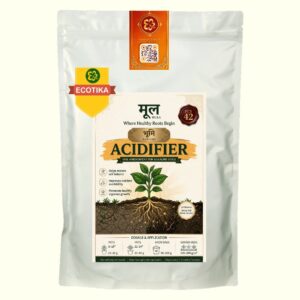
Soil Acidifier for Alkaline Soil | Soil pH Management | PCS-42 Ecotika
₹141.00 – ₹1,350.00Price range: ₹141.00 through ₹1,350.00 Sale! Select options Select options This product has multiple variants. The options may be chosen on the product page Buy nowRated 4.46 out of 5
Reviews
There are no reviews yet.