
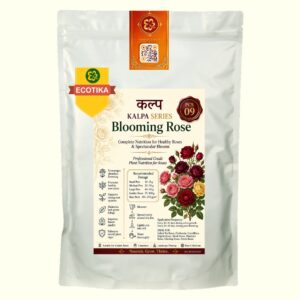
PCS 9
Kalpa Series
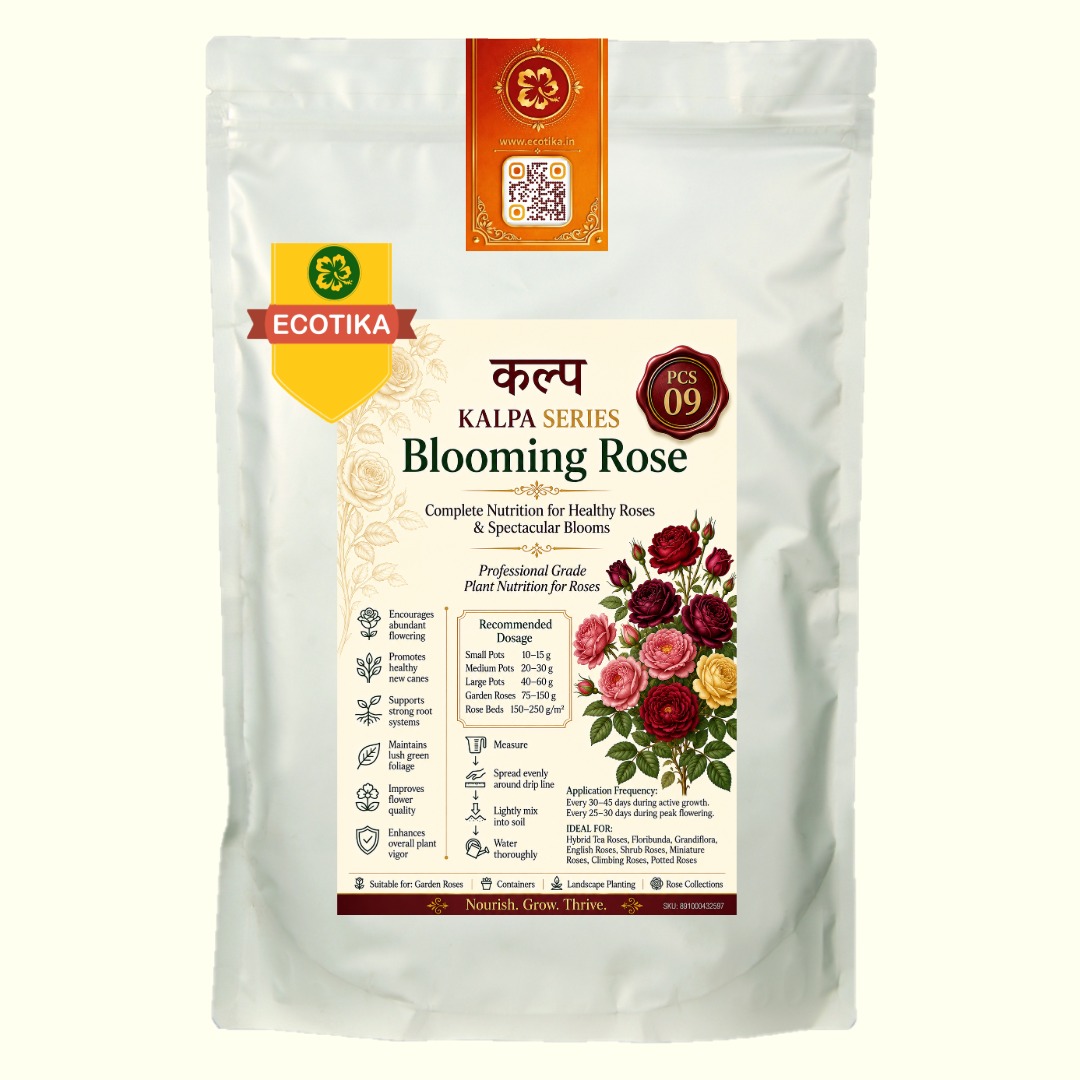
Blooming Rose PCS-09 | 20 x 250 gms pack | Ecotika Entreprise Solution
Specialized rose nutrition supporting healthy growth, flowering, foliage quality and sustained ornamental plant vitality.
₹3,000.00 Original price was: ₹3,000.00.₹1,600.00Current price is: ₹1,600.00.
Short Description
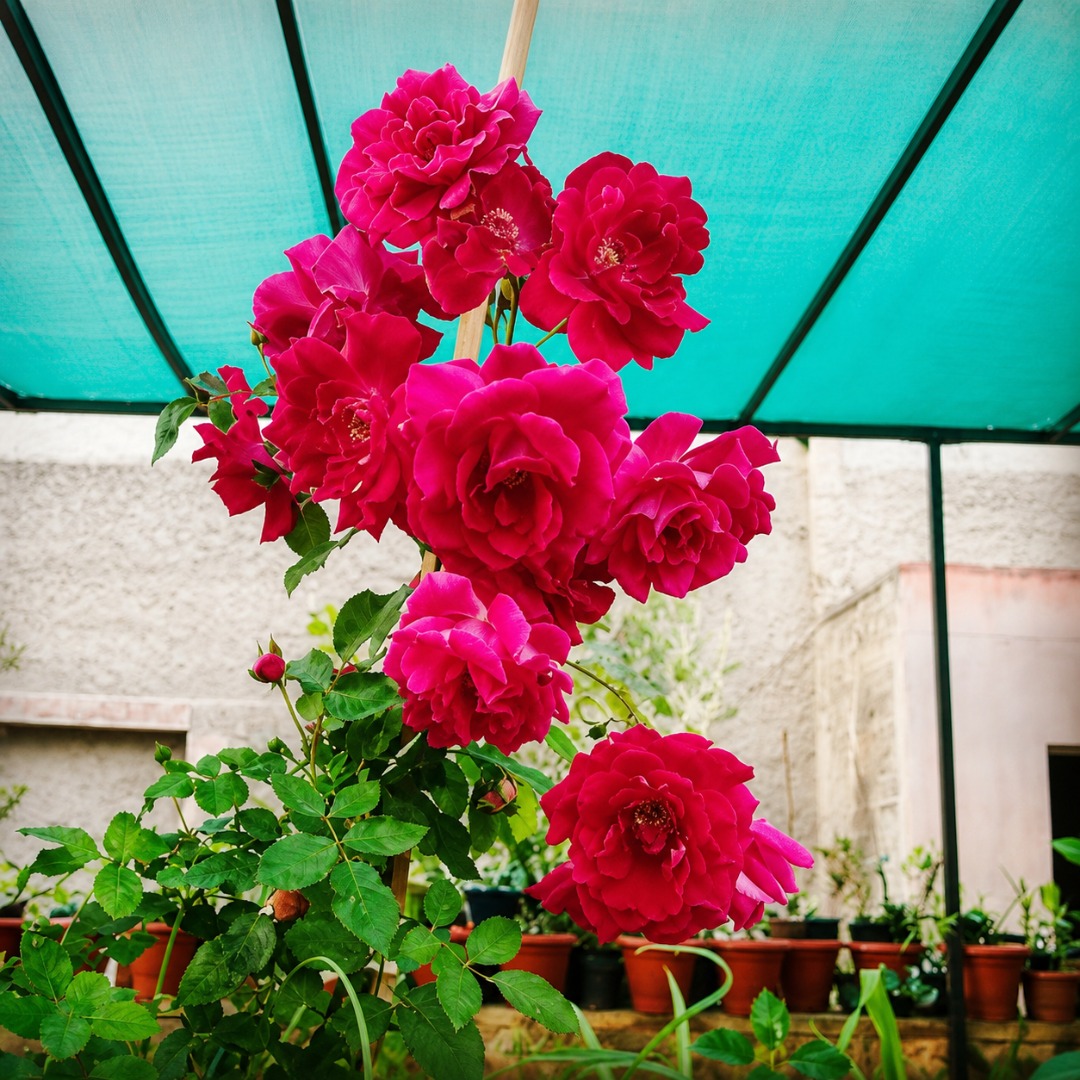
Blooming Rose is a purpose-designed plant nutrition solution for roses, developed to support healthy vegetative growth, flowering, foliage quality and overall plant vigour.
It is suitable for container-grown roses, garden roses, nursery production and established ornamental rose plants, making it a practical crop-specific solution for both retail gardeners and professional growers.
Key benefits:
- Supports healthy rose growth
- Supports bud development and flowering
- Helps maintain foliage quality and plant vigour
- Supports nutritional requirements during active growth
- Suitable for regular rose-care programmes
- Designed specifically around the needs of flowering roses
Starting dosage: Approximately 15?20 g per established potted rose per application, adjusted according to plant size, container volume and growing conditions.
Application interval: Approximately 30?45 days during active growth, with frequency adjusted according to plant response and the complete nutrition programme.

Why Choose this product
Roses have substantial nutritional requirements during periods of active vegetative growth and repeated flowering. A suitable nutrition programme therefore needs to support the plant beyond simply encouraging flowers.
Blooming Rose is designed around this whole-plant approach.
Dedicated nutrition for roses
A crop-specific product gives growers a straightforward solution for routine nutritional management of roses without requiring them to translate a generic plant-care product into a rose-specific programme.
Supports flowering and plant development
Flower production depends on a healthy plant with adequate nutritional resources. Blooming Rose is designed to support both vegetative development and the nutritional requirements associated with flowering.
Supports repeated growth cycles
Roses can undergo successive cycles of shoot growth and flowering. Maintaining appropriate nutrition during active growth helps support the plant through these cycles.
Suitable for retail and professional growers
Its crop-specific positioning makes Blooming Rose easy for garden retailers and nurseries to recommend to rose-growing customers.
Strong repeat-use potential
Rose growers generally manage their plants over an extended period rather than making a single seasonal application. A dedicated nutrition product therefore fits naturally into a continuing plant-care programme.
Product Desciption
Blooming Rose is a specialized plant nutrition solution developed for cultivated roses.
Roses require adequate nutrition for leaf production, shoot development, root activity, bud formation and flowering. These processes are interconnected: a plant must maintain sufficient vegetative growth and photosynthetic capacity to support subsequent flowering.
Blooming Rose provides nutritional support across these stages.
Supports vegetative growth
Healthy leaves and shoots provide the photosynthetic capacity required for continued plant development and flowering. Appropriate nutrition helps maintain this growth under suitable growing conditions.
Supports flowering
Bud formation and flower development require adequate nutritional availability. Blooming Rose is designed to support the nutritional demands associated with active flowering.
Supports foliage quality
Healthy foliage contributes to photosynthesis and overall plant performance. Maintaining appropriate nutrition is one component of maintaining healthy rose foliage.
Supports overall plant vigour
The objective is not simply to produce flowers but to maintain a healthy plant capable of continuing its growth and flowering cycles.
Suitable plants
Blooming Rose is suitable for:
- Garden roses
- Hybrid tea roses
- Floribunda roses
- Florist and nursery roses
- Container-grown roses
- Landscape roses
- Established ornamental rose plants
Suitable growing conditions
Roses generally perform best with:
- Good sunlight
- Appropriate irrigation
- Good drainage
- Healthy root systems
- Suitable growing media
- Adequate air circulation
- Appropriate pruning
Nutrition should be considered as one component of this complete cultivation system.
Problems this product helps address
Blooming Rose is intended to support nutritional-management challenges associated with:
- Roses requiring regular nutritional support
- Maintaining healthy vegetative growth
- Supporting bud development
- Supporting flowering cycles
- Maintaining healthy foliage
- Supporting overall rose vigour
- Container-grown rose nutrition
- Nursery rose production
- Long-term maintenance of established ornamental roses
Important distinction
Poor flowering, yellow leaves, leaf drop or weak growth should not automatically be attributed to nutrition.
Roses can respond strongly to inadequate sunlight, excessive or insufficient irrigation, poor drainage, root problems, pests, diseases, unsuitable pH, pruning practices and temperature conditions.
Application method and dosage
Established potted roses
For dosage refer the label of the product.
Smaller roses
Use a proportionately lower quantity according to:
- Plant size
- Container volume
- Root-zone volume
- Growth stage
Application frequency
A practical starting programme is:
Every 30–45 days during active growth.
The interval can be adjusted according to plant response, season, growing conditions and the rest of the nutrition programme.
During flowering
Appropriate nutrition can support the plant through active flowering and subsequent growth cycles.
However, increasing the dosage simply to obtain more flowers is not recommended. Excessive nutritional inputs do not guarantee improved flowering and may adversely affect plant health.
Garden beds
For roses planted directly in the ground, application should be based on the area, plant size and soil conditions rather than directly transferring a container dosage.
For professional cultivation, soil testing can help establish a more precise nutritional programme.
Best time to apply
Apply when the plant is actively growing and the root zone has appropriate moisture.
Precautions
- Do not apply directly against the stem.
- Do not substantially exceed the recommended quantity.
- Avoid application to severely drought-stressed plants until adequate moisture is restored.
- Maintain good drainage.
- Consider all other nutrient inputs when planning the complete feeding programme.
- Do not interpret every instance of yellowing or poor flowering as a nutritional deficiency.
Storage
Store in a cool, dry and well-ventilated location, protected from moisture.
Keep the package properly sealed when not in use.
Assumption: The dosage and interval above are conservative horticultural starting recommendations inferred from the supplied technical information and intended crop use. Actual requirements vary according to plant size, container volume, growing medium, climate and the complete nutrition programme.
FAQ(s)
1. What is Blooming Rose used for?
Blooming Rose is designed to provide nutritional support for rose growth, foliage development, bud formation, flowering and overall plant vigour.
2. Does Blooming Rose support flowering?
Yes. It is designed to support the nutritional requirements associated with active growth and flowering. Actual flowering depends on sunlight, temperature, pruning, plant maturity, irrigation and overall plant health.
3. How much should I use on a rose plant?
For an established potted rose, begin with approximately 5–10 g per plant per application. Smaller plants should receive proportionately less.
4. How often should I apply it?
A practical starting interval is 30–45 days during active growth, adjusted according to plant response and growing conditions.
5. Can Blooming Rose be used for container roses?
Yes. It is suitable for container-grown roses, with dosage adjusted according to container and plant size.
6. Can nurseries use Blooming Rose?
Yes. It can form part of a nursery nutrition programme for roses. Application should be adapted according to plant maturity, container size, growing medium and production conditions.
7. Can I apply it while the rose is flowering?
Yes. Active flowering is a period of significant physiological activity, and appropriate nutrition can form part of the plant’s maintenance programme.
8. Will applying more produce more flowers?
Not necessarily. Higher application rates do not guarantee increased flowering. Excessive nutritional inputs can create unnecessary stress and should be avoided.
9. Can it be used after pruning?
Yes. Once the plant resumes active growth, appropriate nutrition can support the new vegetative growth that follows pruning.
10. Can Blooming Rose be used with other plant nutrition products?
It can form part of an integrated programme, but the total nutritional contribution of all products should be considered to avoid excessive or redundant inputs.
11. What if my rose has yellow leaves?
Yellowing can have many causes, including water stress, root problems, pests, disease, unsuitable pH, nutrient imbalance or environmental stress. Do not automatically increase nutrition without identifying the likely cause.
12. How should Blooming Rose be stored?
Store it sealed in a cool, dry location protected from moisture and direct weather exposure.
Reviews
There are no reviews yet.