
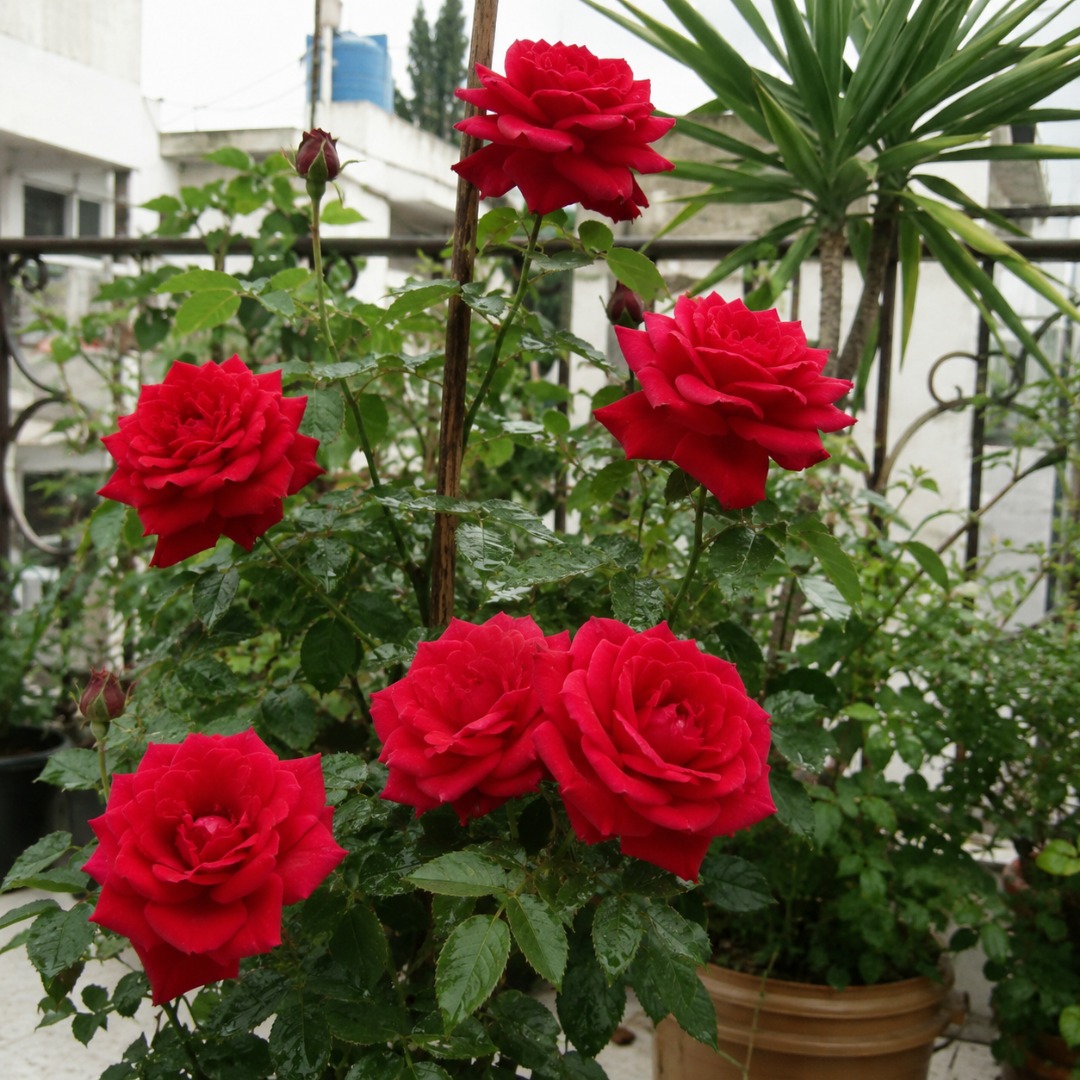
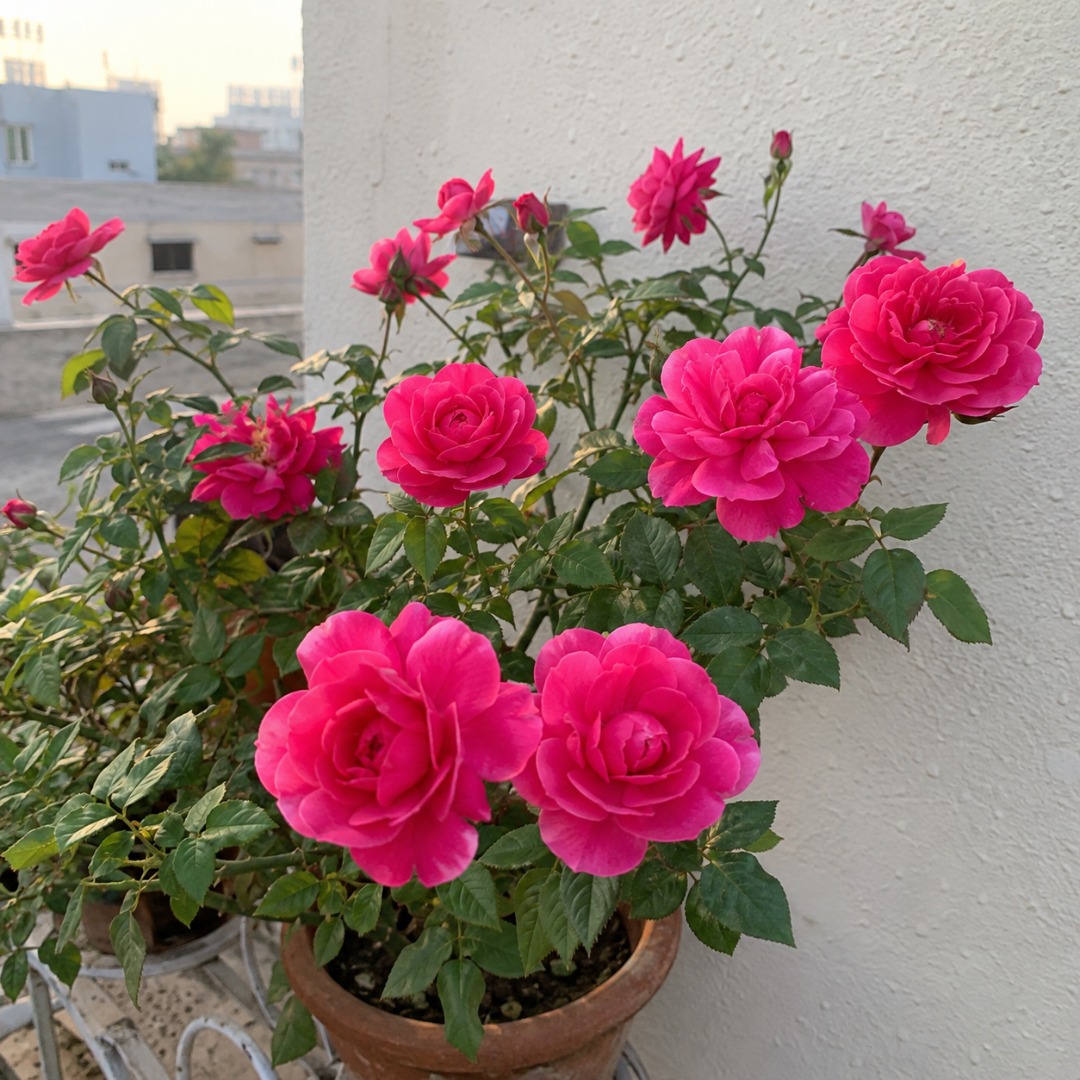
PCS 9
Kalpa Series
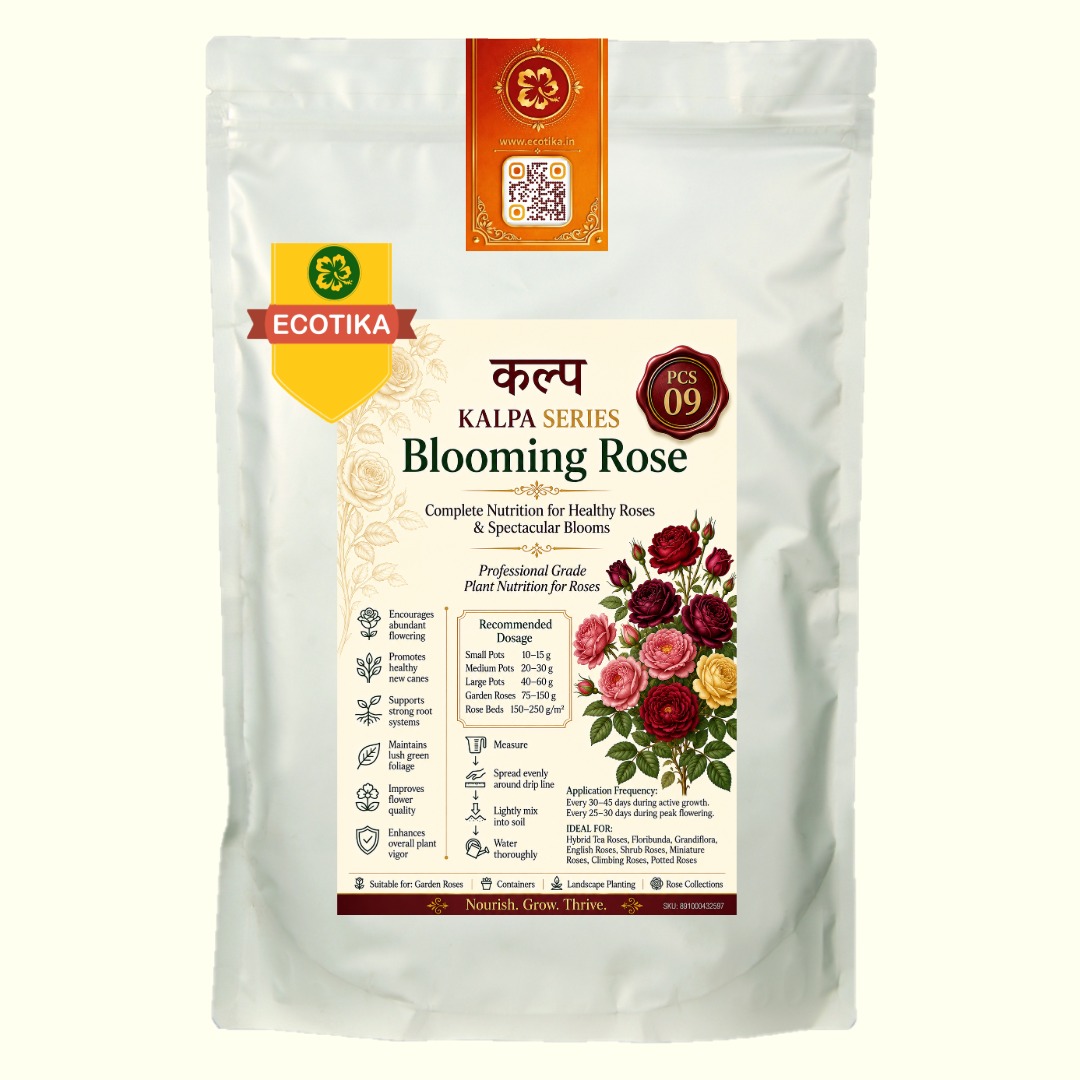
Blooming Rose PCS-09 | Rose Plant Food for Flowering | Ecotika
Purpose-designed nutrition for vigorous rose growth, healthy flowering and sustained performance through the growing season.
₹141.00 – ₹350.00Price range: ₹141.00 through ₹350.00
Short Description
Blooming Rose is a specialized Plant Care Solution developed for rose growers seeking balanced nutritional support for healthy growth, strong flowering and sustained performance through the flowering season.
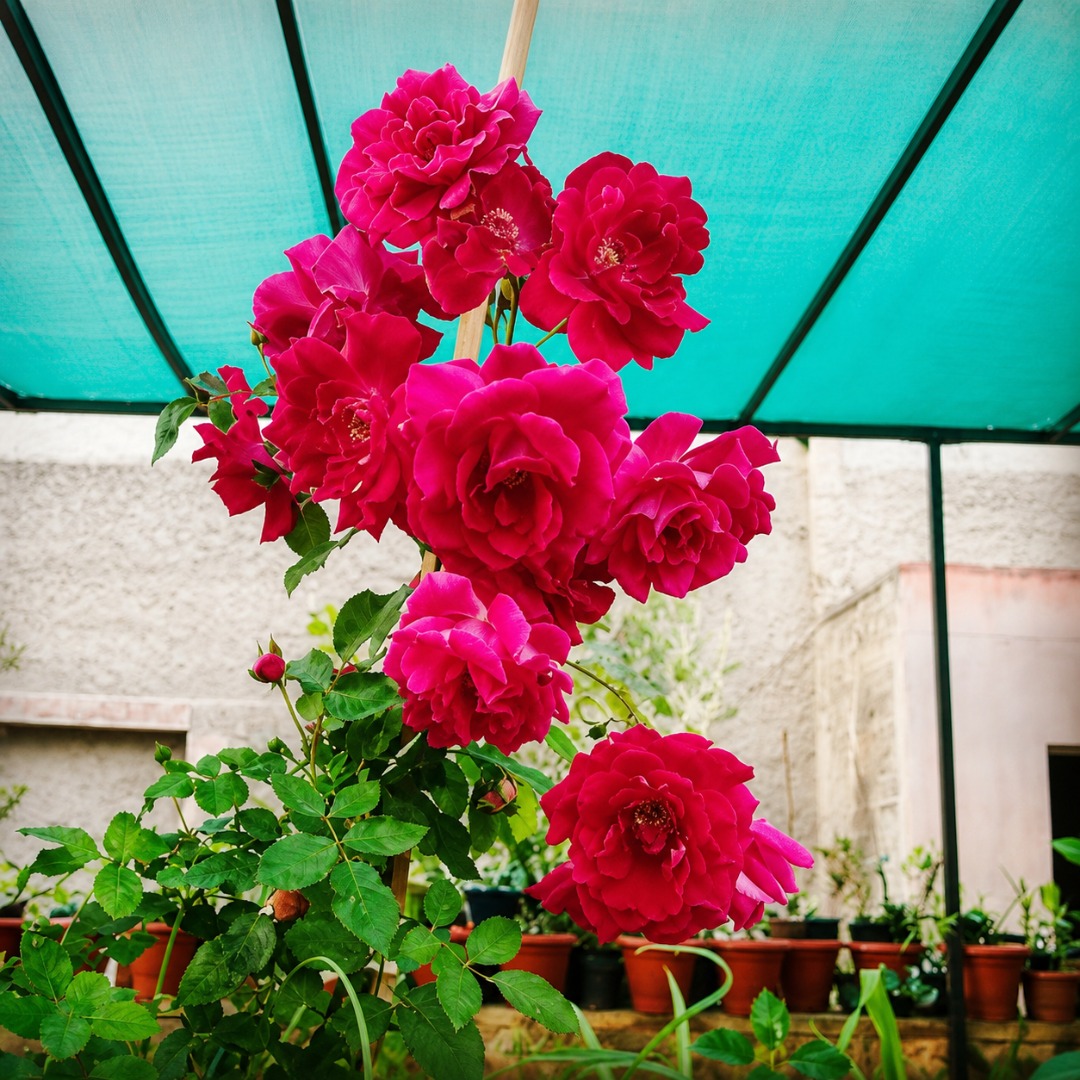
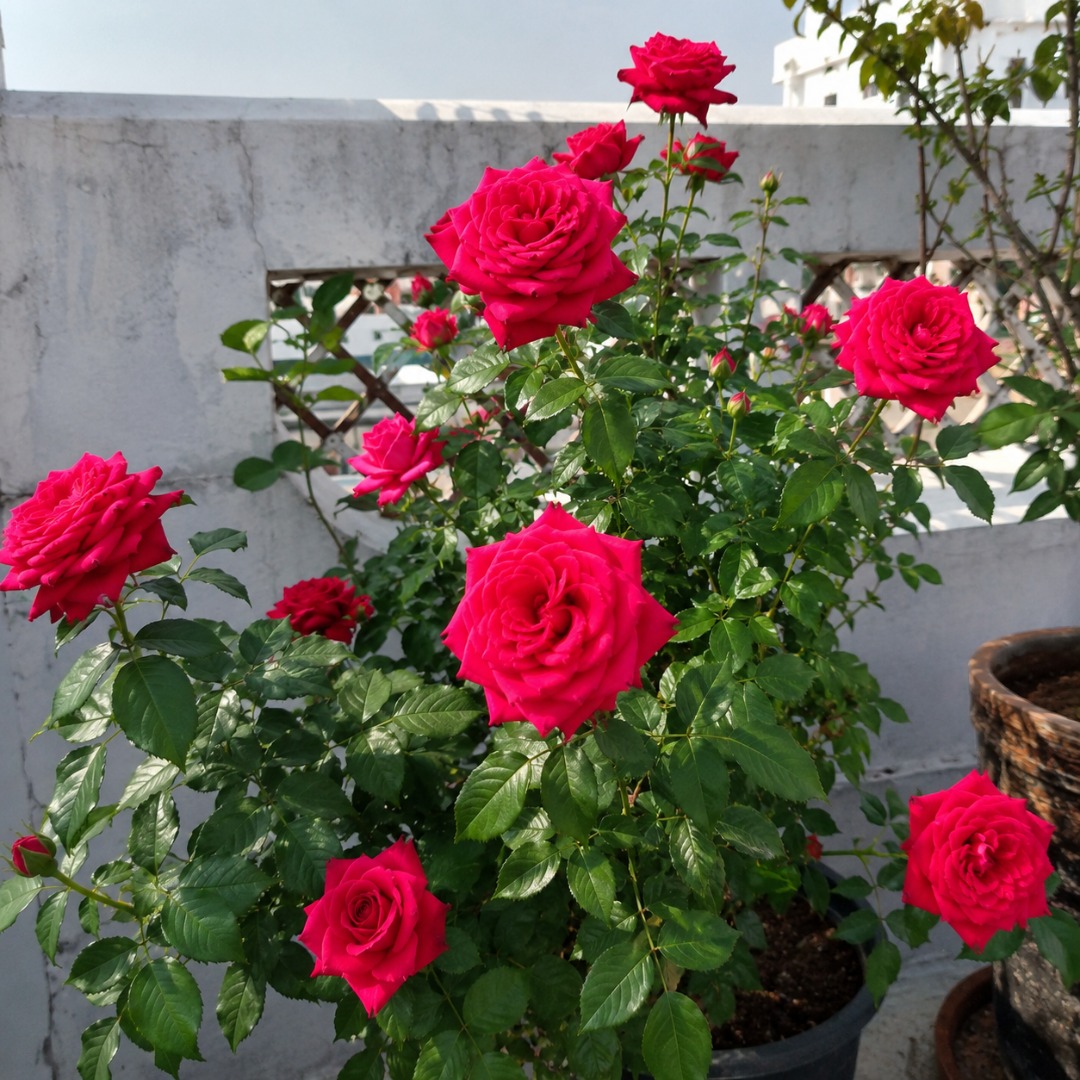
It is designed for garden roses, container roses and established rose plants, helping gardeners maintain a consistent nutritional programme alongside adequate sunlight, watering, pruning and soil care.
Best suited for: Roses and established flowering plants
Primary uses: Healthy growth, flowering support and nutritional maintenance
Suitable for: Pots, containers, balconies, terraces and garden beds
Dosage Chart
Growing Environment Pot / Plant Spec Dosage per Application (Grams) Approximate Visual Equivalent Small Pot 6?8 inch diameter 5 ? 8 g ~1 tsp Medium Pot 10?12 inch diameter 12 ? 15 g ~1 tbsp Large Pot 14?16 inch diameter 20 ? 25 g ~1.5 to 2 tbsp
Why Choose this product
Roses are demanding flowering plants. Producing repeated flushes of healthy foliage and flowers requires an appropriate combination of light, root health, water, pruning, nutrition and seasonal growing conditions.
Blooming Rose is designed specifically around the practical needs of rose cultivation rather than being positioned as a generic plant-care product.
It provides nutritional support intended to complement:
- Healthy root development
- Active vegetative growth
- Flower-bud development
- Repeated flowering cycles
- Overall plant vigour
Designed for regular rose care
A good rose nutrition programme is not about applying large quantities of nutrients immediately before flowering. Consistent, appropriate nutrition throughout active growth is generally more useful than excessive feeding.
Blooming Rose is therefore intended to be used as part of a structured rose-care routine.
Product Desciption
Roses require adequate nutrition to maintain vigorous growth and produce flowers. Nutritional demand changes with the plant’s growth stage, while environmental factors strongly influence flowering.
Blooming Rose provides a targeted nutritional profile intended to support the major physiological demands of actively growing and flowering roses.
Supporting healthy foliage and shoots
Healthy leaves are essential for photosynthesis and provide the plant with the energy required for subsequent growth and flowering.
Appropriate nitrogen nutrition supports formation of new vegetative tissue, but excessive nitrogen can encourage overly vigorous foliage at the expense of desirable flowering performance.
Blooming Rose is designed around a more balanced nutritional approach rather than simply maximizing vegetative growth.
Supporting flower development
Flower formation requires adequate plant reserves and appropriate nutrition. Phosphorus and potassium are involved in important aspects of plant energy metabolism, reproductive development and overall physiological function.
Blooming Rose provides nutritional support during the active growth and flowering cycle, while allowing the gardener to manage the other factors that influence flowering.
Supporting repeated flowering
Roses can produce multiple flowering flushes during favourable growing conditions.
Maintaining appropriate nutrition between flowering cycles can help support continued growth and flower production, provided the plant also receives sufficient light, water and appropriate pruning.
Nutrition is only one part of flowering
If a rose is producing leaves but very few flowers, increasing nutrition is not necessarily the answer.
Other factors should be checked first:
- Is the plant receiving sufficient direct sunlight?
- Is pruning appropriate for the rose type?
- Is the growing medium well drained?
- Is watering consistent?
- Is the plant excessively vegetative?
- Is the plant experiencing heat or other environmental stress?
- Is the plant mature enough to flower normally?
Blooming Rose should complement these practices rather than replace them.
Problems this product helps address
Blooming Rose is intended to support gardeners dealing with situations such as:
- Roses requiring regular nutritional support
- Weak or slow vegetative development where nutrition is a contributing factor
- Plants entering an active flowering cycle
- Roses requiring nutritional support between flowering flushes
- Container roses requiring structured nutrition
- Established garden roses requiring ongoing nutritional maintenance
If your rose is not flowering
Before increasing nutrition, check:
Light → Pruning → Watering → Drainage → Root health → Plant maturity → Nutrition
Poor flowering can have many causes and should not automatically be attributed to nutrient deficiency.
Blooming Rose is not a pesticide, disease treatment or guaranteed flowering stimulant.
Application method and dosage
1. Dosage Chart
| Growing Environment | Pot / Plant Spec | Dosage per Application (Grams) | Approximate Visual Equivalent |
| Small Pot | 6–8 inch diameter | 15 – 20 g | ~1 tsp |
| Medium Pot | 10–12 inch diameter | 20 – 30 g | ~1 tbsp |
| Large Pot | 14–16 inch diameter | 40 – 50 g | ~1.5 to 2 tbsp |
| Extra Large / Tub | 18+ inch diameter | 50 – 60 g | ~2 to 2.5 tbsp |
| In-Ground Bed | Young Bush / Miniature Rose | 30 – 40 g | ~2 to 2.5 tbsp |
| In-Ground Bed | Established Bush / Hybrid Tea | 50 – 75 g | ~3 to 5 tbsp |
| In-Ground Bed | Large Climber / Rose Tree | 80 – 100 g | ~1/3 to 1/2 cup |
2. Application Frequency & Seasonal Schedule
-
Active Growing & Flowering Peak (Spring & Post-Pruning): Apply every 15 to 20 days to support heavy flush development, robust root development, and rapid flower bud formation.
-
Monsoon / Rainy Season: Apply every 20 to 25 days to replenish nutrients washed out by rainfall and maintain steady growth.
-
Peak Summer / Heatwave: Reduce frequency to once every 30 days at lower dosages, as extreme heat slows down bud setting.
-
Winter / Cold Dormancy: Suspend feeding completely or restrict to once every 60 days in mild climates to allow the plant to rest.
3. Best Practices for Soil Application
-
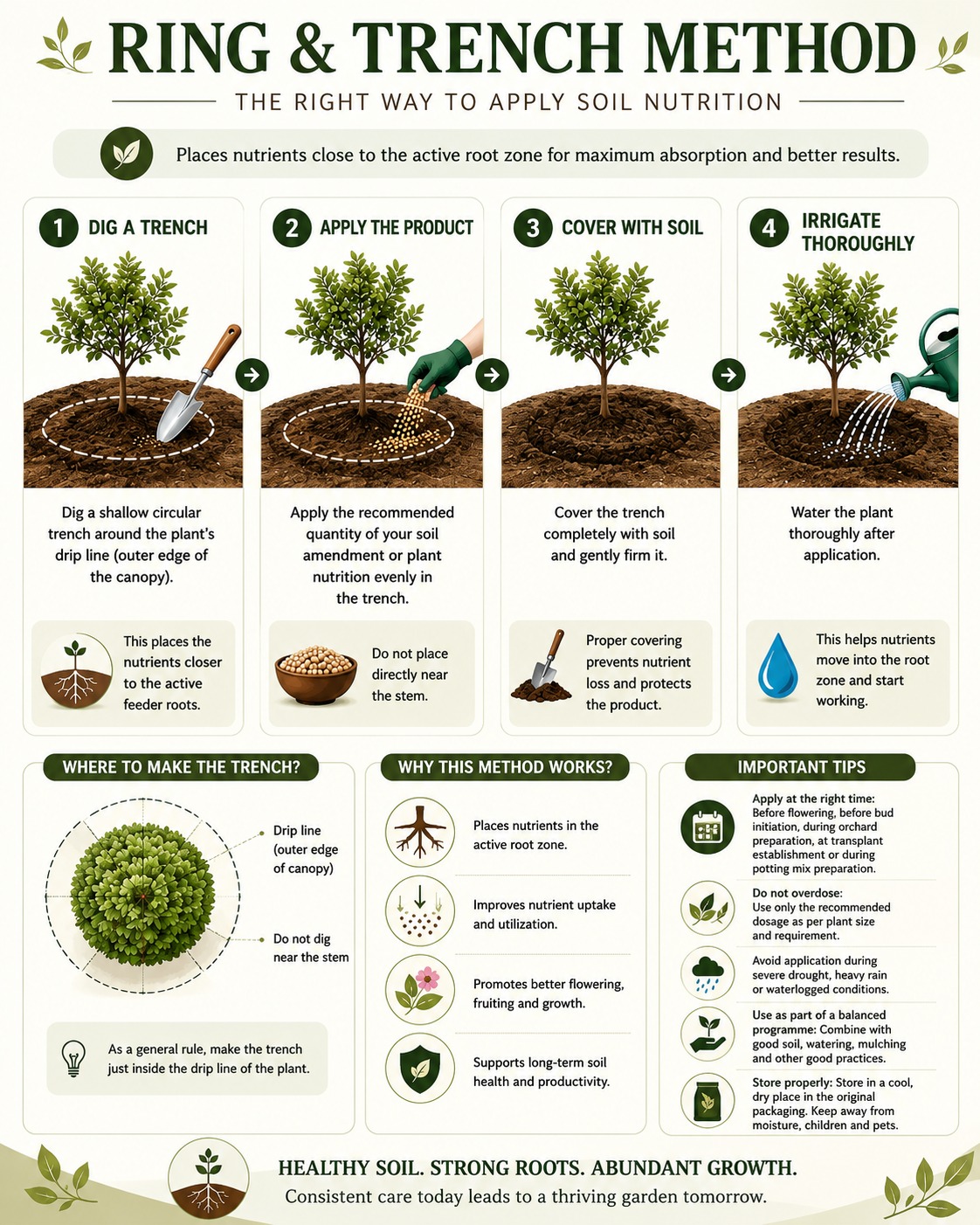
Light Soil Scratching (Godi): Gently loosen the upper 1–2 inches of topsoil around the root zone, keeping a clear gap from the main stem or graft union.
-
Canopy Edge Placement: Distribute the blend evenly in a ring along the drip line (outer edge of the foliage canopy) where active feeding roots absorb nutrients.
-
Soil Incorporation: Work the blend slightly into the topsoil to ensure organic meals and phosphorus sources decompose efficiently near the root zone.
-
Immediate Thorough Irrigation: Water deeply right after application to dissolve soluble elements (MKP and Ammonium Sulphate) and activate organic breakdown.
FAQ(s)
1. What is Blooming Rose used for?
Blooming Rose is a specialized Plant Care Solution for roses, designed to provide nutritional support for healthy growth and flowering.
2. Is Blooming Rose suitable for potted roses?
Yes. It is suitable for container-grown roses when the application is adjusted according to container size and plant maturity.
3. Can I use it for garden roses?
Yes. It can be incorporated into the nutritional programme of established roses growing in garden beds.
4. Does Blooming Rose help roses flower?
It provides nutritional support that complements the plant’s flowering cycle. Flowering also depends on sunlight, pruning, watering, plant maturity, temperature and overall plant health.
5. Can I use it while my rose is flowering?
Yes. It can form part of a nutritional programme during active growth and flowering.
6. Can I apply more before flowering?
No. Increasing the quantity does not guarantee more flowers. Excessive nutrition can create nutritional imbalance and unnecessary root-zone stress.
7. Why does my rose have lots of leaves but few flowers?
Excessive vegetative growth can be one factor, but insufficient light, pruning practices, plant maturity, environmental conditions and other factors should also be considered.
8. How often should I apply Blooming Rose?
Use periodically during active growth. The interval should reflect the plant’s size, growing medium, season and overall nutritional programme.
9. Can I use it for young rose plants?
Yes, but young plants require conservative applications. Avoid using quantities intended for mature plants.
10. Can I use Blooming Rose on climbing roses?
Yes, provided the plant is actively growing and the application is adjusted according to its size and growing conditions.
11. Can I use it for miniature roses?
Yes. Use a suitably reduced quantity for the smaller plant and container volume.
12. Does Blooming Rose replace pruning?
No. Correct pruning is an important part of rose cultivation and flowering management.
13. Does it replace sunlight?
No. Roses generally require substantial sunlight for vigorous growth and good flowering.
14. Can I use Blooming Rose with other plant-care products?
Compatibility depends on the other product and its method of application. Avoid unnecessarily combining multiple concentrated nutritional products.
15. How quickly will I see results?
Response varies according to plant health, season, light, root condition, watering and other growing conditions. Consistent plant care should be evaluated over a complete growth and flowering cycle rather than expecting an immediate response.
Reviews
There are no reviews yet.