
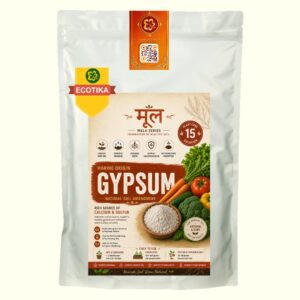
PCS 15
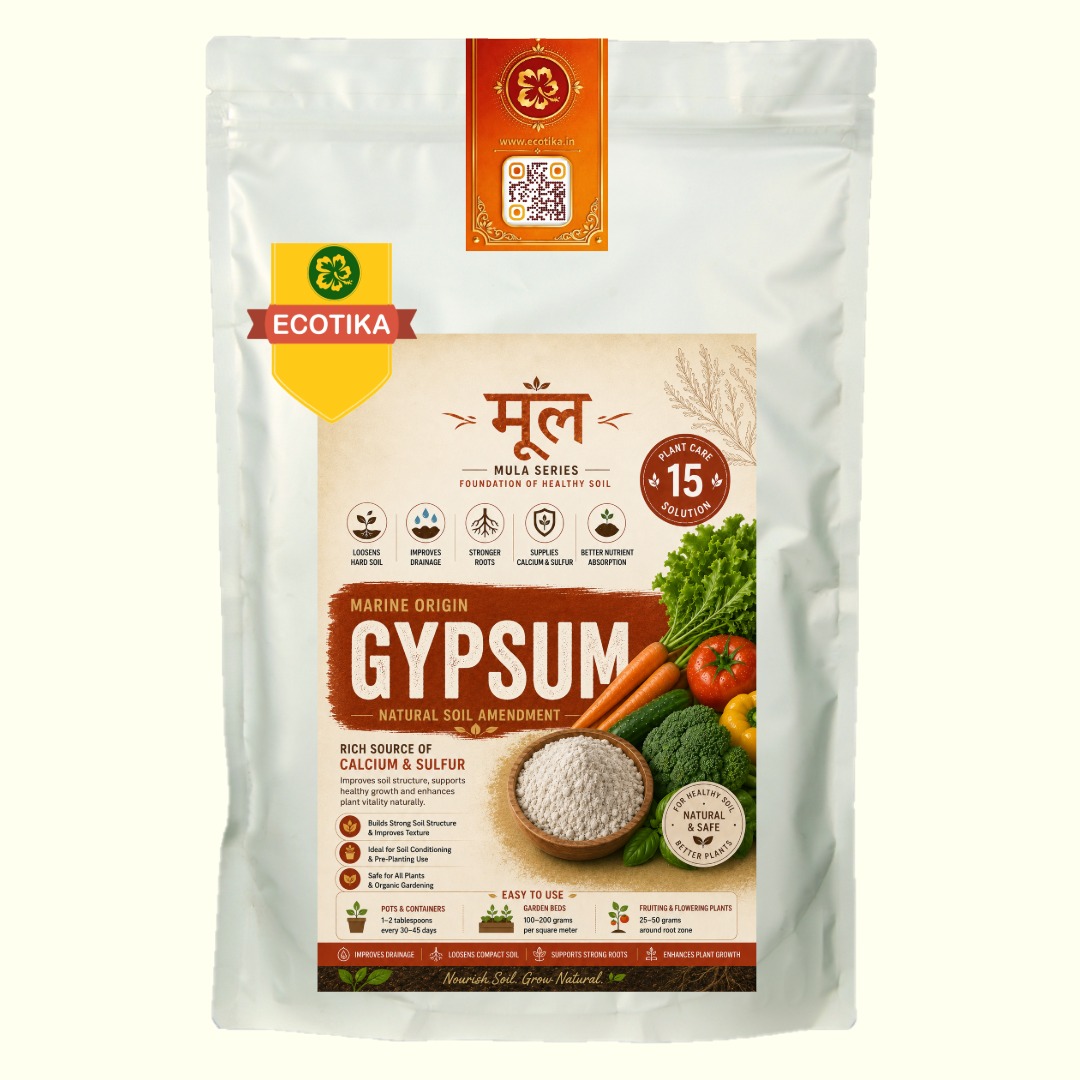
Mula Series
Gypsum PCS-15 | Soil Improvement & pH Management | Ecotika
Fine-ground gypsum for calcium-based soil conditioning, sodium management and improved root-zone water movement where appropriate.
₹141.00 – ₹1,350.00Price range: ₹141.00 through ₹1,350.00
Short Description
Gypsum (Marine) is a soil-conditioning Plant Care Solution designed to support better root-zone conditions where soil structure, sodium-related soil problems or restricted water movement are limiting plant growth.
It is particularly relevant for gardeners dealing with alkaline, sodic or salt-affected soils, provided the underlying soil condition is correctly identified.
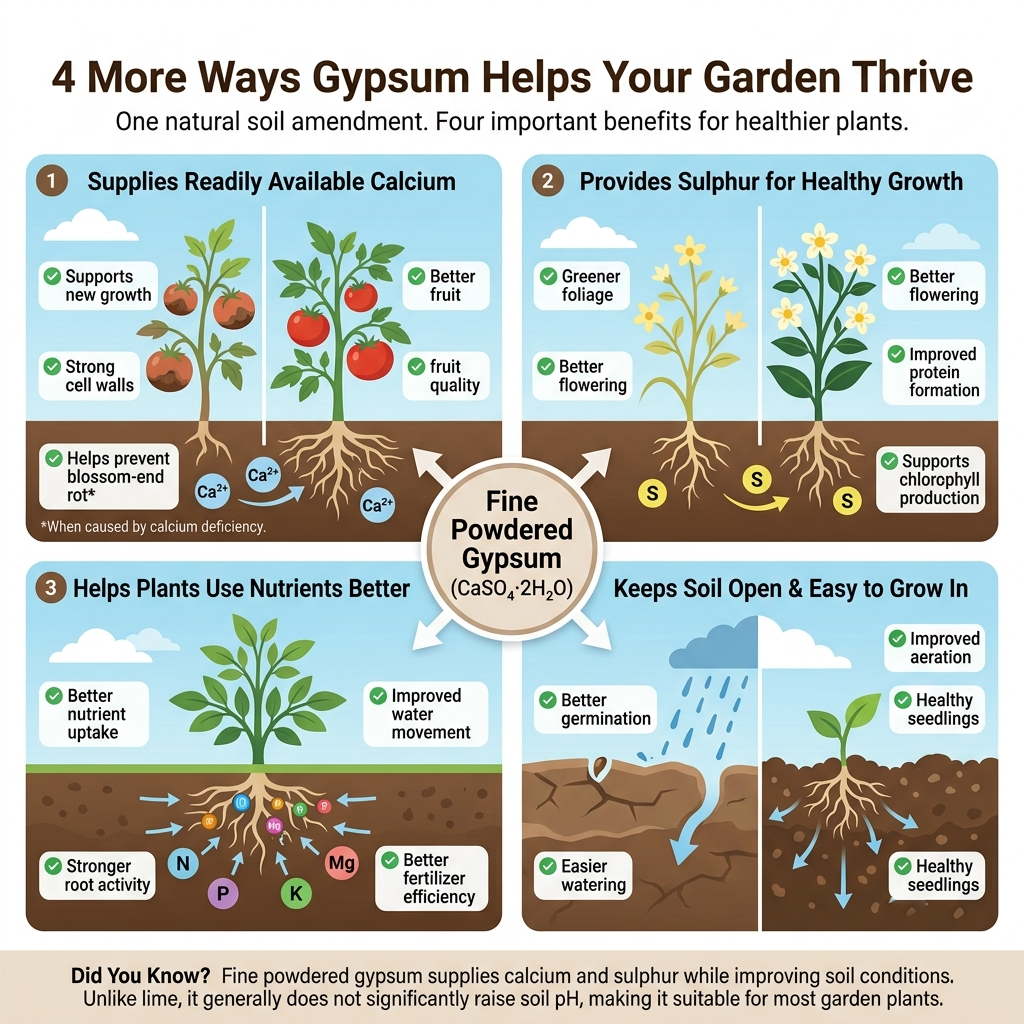
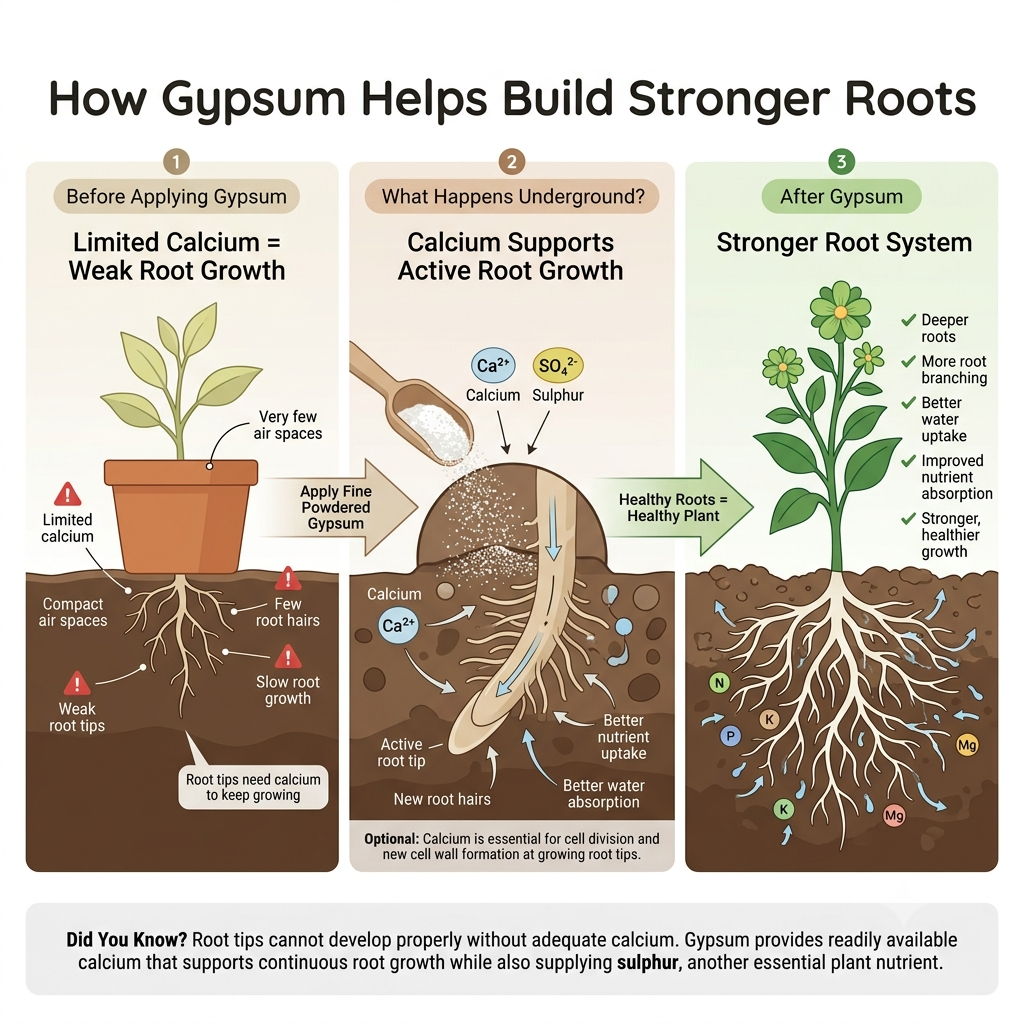
Gypsum supplies calcium and sulfur and can be especially useful in sodic soils, where calcium helps displace exchangeable sodium and improve soil physical condition. Successful salt management, however, also requires adequate drainage and suitable-quality irrigation water.
Best suited for: Soil conditioning and management of suitable salt/sodium-affected soils
Primary uses: Supporting soil structure, improving water movement in appropriate soils and assisting sodium management
Suitable for: Garden beds, containers, lawns, ornamental plants, kitchen gardens and established landscapes where soil testing indicates a need
Dosage Chart
Growing Environment Pot / Plant Spec Dosage per Application (Grams) Approximate Visual Equivalent Small Pot 6?8 inch diameter 15 ? 20 g ~1 to 1.5 tbsp Medium Pot 10?12 inch diameter 25 ? 35 g ~2 tbsp Large Pot 14?16 inch diameter 50 ? 65 g ~1/4 cup
Why Choose this product
Gypsum is different from conventional plant nutrition products. Its primary role is soil amendment and conditioning, rather than simply feeding the plant.
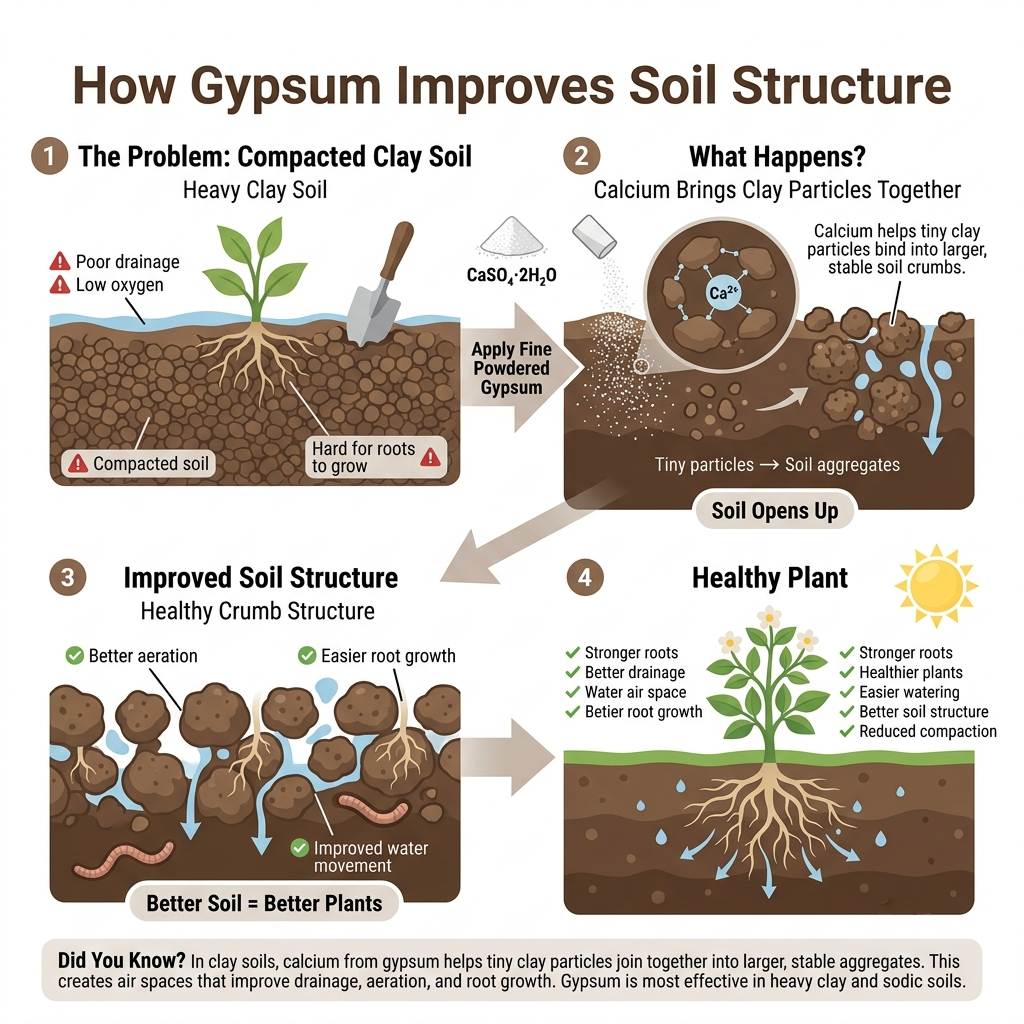
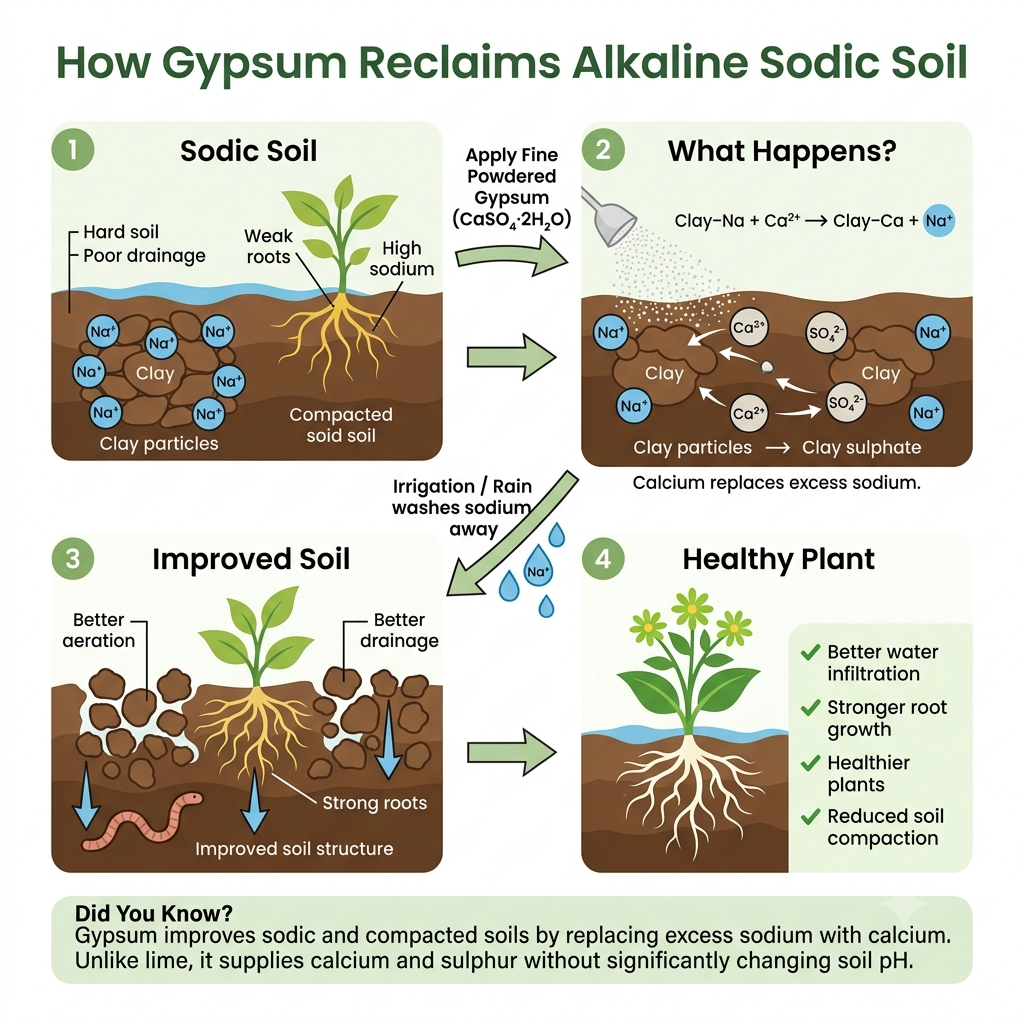
In sodium-affected soils, excess exchangeable sodium can cause clay particles to disperse, reducing pore space, infiltration and drainage. Calcium supplied by gypsum can replace sodium on soil exchange sites; the displaced sodium can then be leached from the root zone when adequate drainage and suitable-quality water are available.
This makes gypsum particularly valuable when the underlying problem is sodicity, rather than ordinary compaction or salinity alone.
A scientifically appropriate soil amendment
Gypsum should not be promoted as a universal solution for every hard or compacted soil.
Its effectiveness depends on soil chemistry. High pH, salinity and sodicity are different conditions and require different management strategies. Soil testing is therefore the best way to determine whether gypsum is appropriate.
Product Desciption
Gypsum (Marine) is a finely ground gypsum soil amendment intended for improving the chemical and physical condition of suitable soils.
How gypsum works in sodic soil
Sodic soils contain excessive sodium associated with soil exchange sites. This can cause soil particles to disperse, resulting in:
- Poor aggregation
- Reduced pore space
- Restricted water infiltration
- Poor drainage
- Surface crusting
- Reduced root-zone aeration
Calcium from gypsum can replace exchangeable sodium. Once displaced, the sodium must be moved out of the root zone through adequate leaching.
This distinction is important:
Gypsum helps displace sodium; water and drainage are needed to remove that sodium from the root zone.
Therefore, simply adding gypsum without providing an appropriate pathway for drainage will not fully resolve a sodicity problem.
Supporting water movement
Where poor infiltration is caused by sodium-related soil dispersion, correcting the underlying sodicity can improve soil structure and water movement.
High sodium can cause clay swelling, dispersion, crusting and pore plugging, all of which interfere with downward water movement.
Supporting salt management
Gypsum itself does not simply “flush salt out” of every soil.
Where gypsum is correcting sodicity, it can facilitate the displacement of sodium from soil exchange sites. Subsequent irrigation with suitable-quality water can then move the released salts below the root zone where drainage permits.
This is why drainage is a critical part of any salt-management programme.
Important distinction: saline vs. sodic soil
A saline soil has excessive soluble salts.
A sodic soil has excessive sodium relative to calcium and magnesium and associated deterioration of soil physical properties.
These conditions are related but are not the same, and they should not be treated identically.
Applying gypsum indiscriminately to a saline soil can actually add to the soil’s soluble salt load without addressing the underlying problem.
Problems this product helps address
Gypsum (Marine) can be relevant to soil-management situations involving:
- Sodium-affected soils
- Sodic soil structure
- Poor infiltration associated with sodicity
- Surface crusting associated with sodium-related soil degradation
- Restricted water movement caused by dispersed soil particles
- Soils requiring additional calcium
- Root-zone conditions where gypsum-based soil amendment is scientifically appropriate
Signs that may justify investigation
Gardeners may notice:
- Water remaining on the surface rather than infiltrating
- Soil crusting
- Poor drainage
- Hard-setting soil
- Restricted root development
- Plants appearing stressed despite adequate irrigation
However, these symptoms do not prove that gypsum is required. Soil testing is the appropriate way to distinguish sodicity from salinity, compaction, high pH and other soil problems.
Application method and dosage
1. Dosage Chart
| Growing Environment | Pot / Plant Spec | Dosage per Application (Grams) | Approximate Visual Equivalent |
| Small Pot | 6–8 inch diameter | 15 – 20 g | ~1 to 1.5 tbsp |
| Medium Pot | 10–12 inch diameter | 25 – 35 g | ~2 tbsp |
| Large Pot | 14–16 inch diameter | 50 – 65 g | ~1/4 cup |
| Extra Large / Tub | 18+ inch diameter | 75 – 100 g | ~1/3 to 1/2 cup |
| In-Ground Bed | Small Plant / Young Shrub | 100 – 150 g | ~1/2 to 3/4 cup per sq. meter |
| In-Ground Bed | Established Garden Bed / Patch | 200 – 300 g | ~1 to 1.5 cups per sq. meter |
| In-Ground Bed | Severe Alkaline / Clay Soil Reclamation | 500 – 1000 g | ~2.5 to 5 cups per sq. meter |
2. Application Frequency & Seasonal Schedule
-
Soil Conditioning & Reclamation (Initial Treatment): Apply once every 3 to 4 months during early spring or autumn to improve soil structure and displace excess sodium.
-
Regular Maintenance (Potted & Garden Plants): Apply 2 to 3 times per year (Spring, Pre-Monsoon, and Post-Monsoon) to supply bioavailable calcium and sulfur without altering soil pH.
-
Potting Mix Preparation: Mix 20–30 grams per 10 liters of soil mix (approx. 0.2–0.3% volume) prior to planting to prevent soil compaction and calcium deficiency.
-
Winter / Dormant Period: Application can be maintained as standard conditioning, as gypsum does not trigger unseasonal vegetative flushes.
3. Best Practices for Soil Application
-
Soil Aeration & Scratching (Godi): Work the gypsum into the top 2–4 inches of topsoil around the root zone or across the entire planting bed to ensure uniform distribution.
-
Even Surface Broadcasting: Scatter fine ground gypsum evenly over the soil surface, ensuring complete coverage around the plant’s drip line.
-
Soil Incorporation: Soil microbial action is not required for activation, but thorough mechanical mixing with heavy clay or sodic soil maximizes calcium exchange efficiency.
-
Deep Hydration: Water heavily immediately after application. Water is required to dissolve calcium sulfate and leach displaced sodium ions deep below the root zone.
FAQ(s)
1. What is Gypsum (Marine) used for?
It is a soil amendment intended primarily for improving suitable soils affected by sodium-related structural problems and for supplying calcium and sulfur.
2. Does gypsum loosen soil?
Gypsum can improve soil physical condition when poor structure is associated with sodicity. It should not be described as a universal solution for compacted soil.
3. Does gypsum improve water infiltration?
It can improve infiltration where sodium-induced soil dispersion is responsible for poor structure. High sodium can reduce infiltration by causing clay dispersion and pore plugging.
4. Does gypsum remove salt from soil?
Gypsum does not directly wash soluble salt out of soil. In sodic soils, calcium from gypsum can displace sodium, after which adequate water and drainage are required to leach the released salts from the root zone.
5. Can I use gypsum for any salty soil?
Not necessarily. Salinity and sodicity are different soil conditions. Gypsum is particularly relevant where sodium-related soil degradation is present.
6. Can gypsum lower soil pH?
Gypsum should not be considered a primary soil-acidifying amendment. It is primarily a calcium-and-sulfur source and soil conditioner.
7. Can I use gypsum for alkaline soil?
It depends on why the soil is alkaline. High pH alone does not automatically mean gypsum is required. Soil testing is preferable before application.
8. Can I use gypsum in pots?
Yes, where the growing medium indicates a genuine need, but container application should be conservative because drainage and root-zone volume are limited.
9. How much gypsum should I apply?
For significant sodicity problems, the appropriate quantity should ideally be calculated from soil-test information such as exchangeable sodium, CEC and the depth being treated.
10. Do I need to water after applying gypsum?
Where gypsum is being used for sodicity reclamation, adequate moisture is needed to dissolve the amendment, and suitable-quality water is then required to leach displaced sodium below the root zone.
11. What happens if the soil has poor drainage?
Leaching will be ineffective if water cannot move through the soil profile. Drainage should therefore be addressed before attempting substantial salt reclamation.
12. Can gypsum fix compacted soil?
Not necessarily. Compaction caused by traffic, poor soil structure, excessive wet tillage or other physical factors may require different management. Gypsum is most useful where the soil problem is chemically related to sodium.
13. Is gypsum safe for plants?
Gypsum is widely used as a soil amendment, but appropriate application depends on soil conditions. Excessive or unnecessary amendment is not advisable.
14. Can I apply gypsum every season?
Routine seasonal application is not automatically necessary. Reapplication should be based on soil condition and, where relevant, soil-test results.
15. How long does gypsum take to work?
Response depends on soil chemistry, gypsum solubility, incorporation, moisture, drainage and the ability to leach displaced sodium. Sodic-soil reclamation is generally a process rather than an instant correction.
Reviews
There are no reviews yet.