

pcs 15
Mula Series
Gypsum PCS-15 | 20 x 250 gms pack | Ecotika Entreprise Solution
Fine-ground gypsum for soil conditioning, improved water movement and management of sodic and salt-affected soils.
₹2,000.00 Original price was: ₹2,000.00.₹1,100.00Current price is: ₹1,100.00.
Short Description
Gypsum (Marine) is a finely ground gypsum-based soil amendment designed to support soil structure, improve water movement through the soil profile and assist with the management of soluble salts in affected soils.
It is particularly useful where growers are dealing with dense or structurally poor soils, restricted water infiltration or salt accumulation.
Key benefits:
- Supports improvement of soil structure in suitable soils
- Helps improve water infiltration where soil structure is limiting
- Supports movement of soluble salts below the active root zone when adequate drainage is available
- Helps create a more favourable physical environment for roots
- Suitable for gardens, containers, nurseries and professional cultivation where appropriate
- Useful as part of a broader soil-management programme
Dosage: Application should be based on soil type, soil condition, salinity/sodicity status and the intended application area rather than a single universal rate.

Why Choose this product
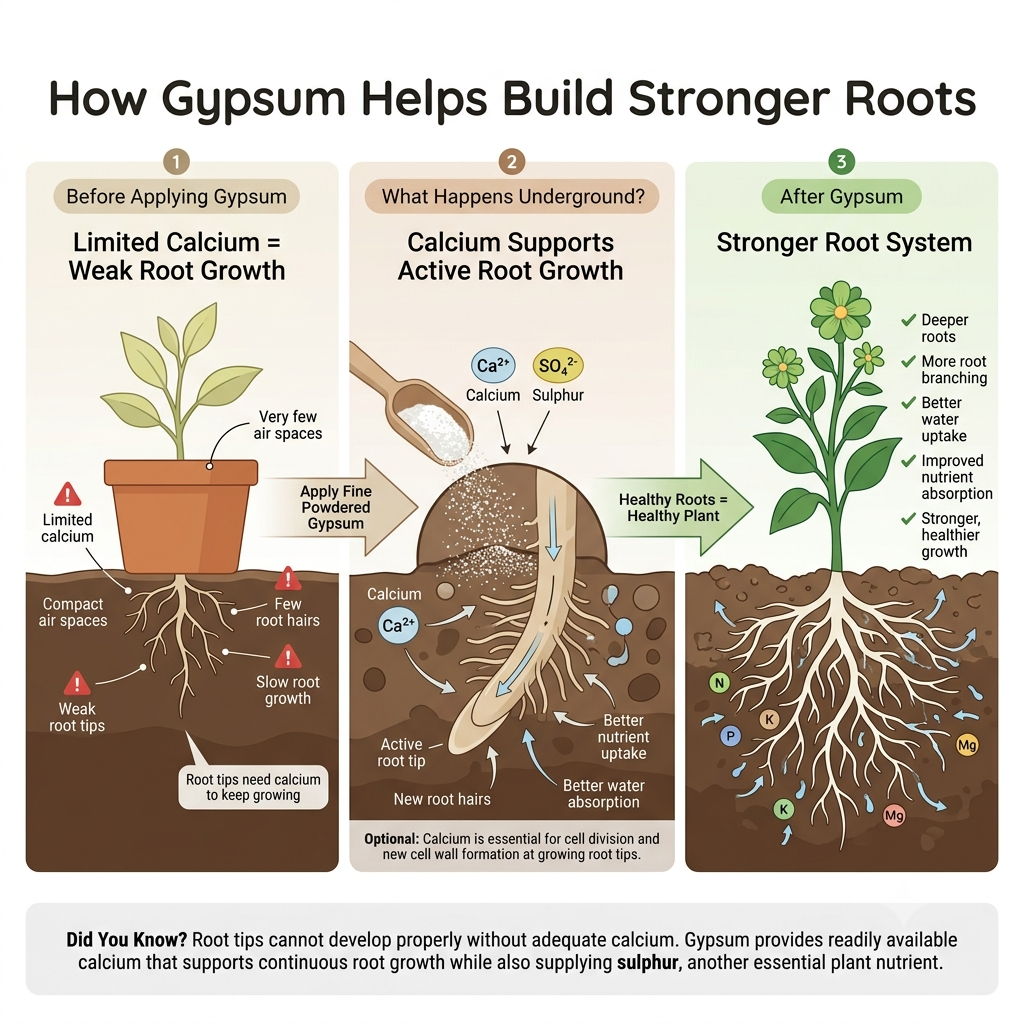
Healthy roots require more than nutrients. They need an appropriate physical environment with adequate pore space, oxygen availability, water movement and drainage.
Gypsum can play an important role in soil physical management, particularly in soils where calcium-based amendment is appropriate.
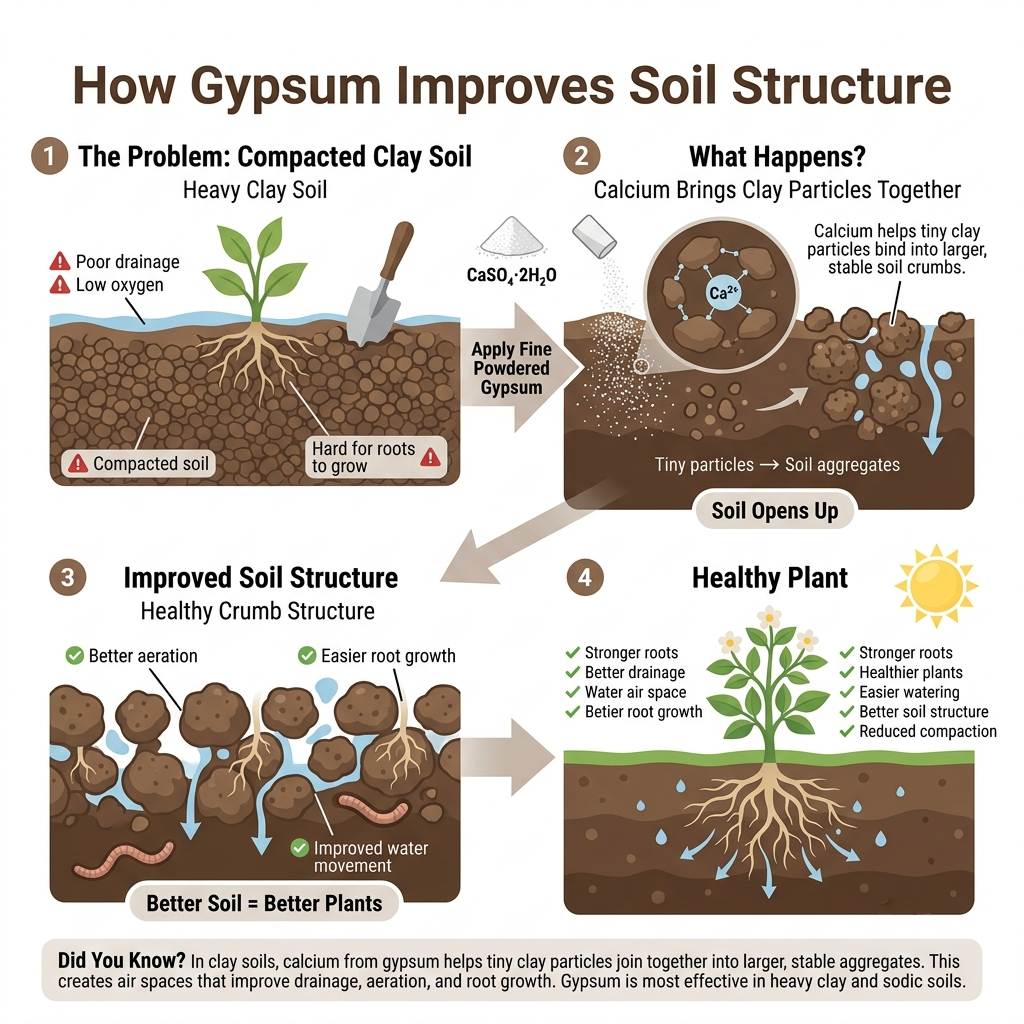
Supports soil structure
Gypsum can help improve aggregation and physical condition in certain problem soils, particularly sodic or dispersive soils, where excess exchangeable sodium contributes to poor aggregation and reduced infiltration.
It should not, however, be described as a universal soil-loosening agent for every compacted soil.
Supports water infiltration
Where poor infiltration is associated with soil structural problems, gypsum can contribute to improved movement of water through the soil profile when used appropriately.
Helps with salt management
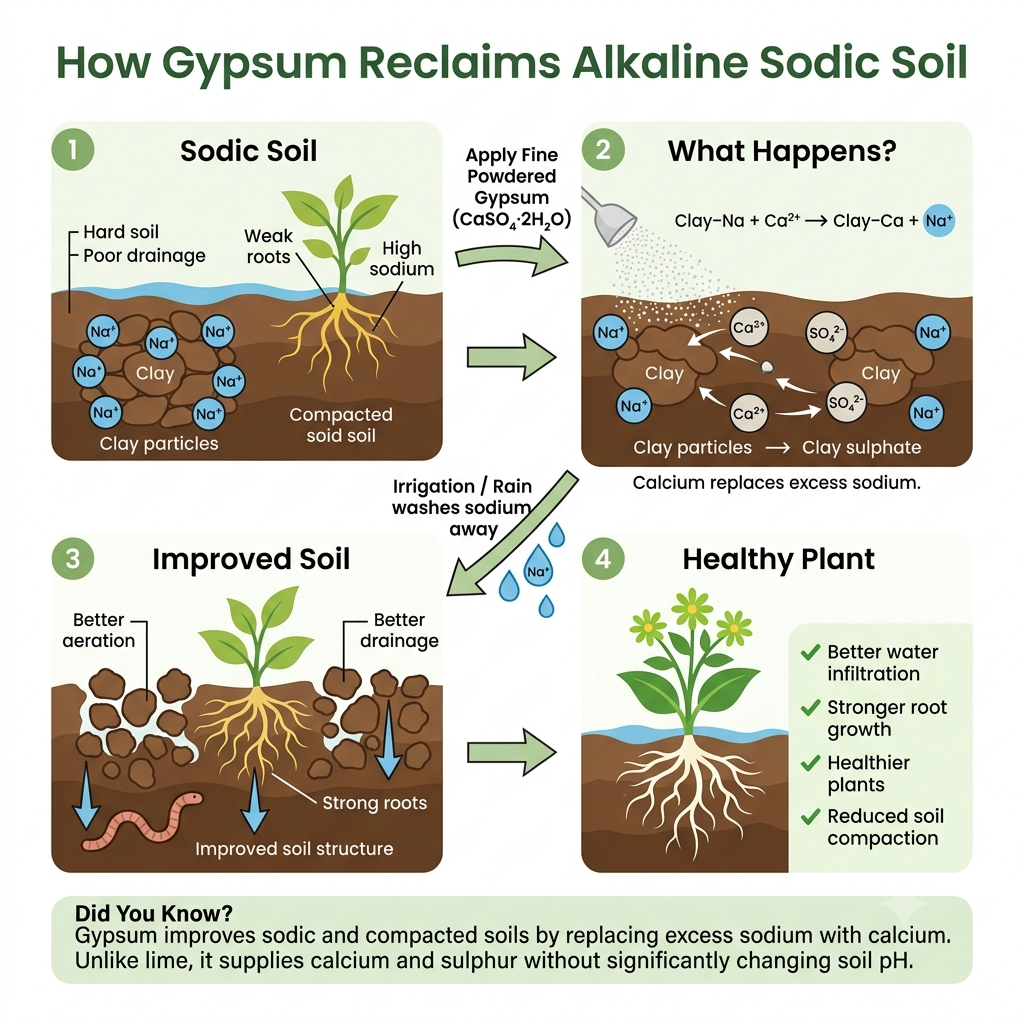
Gypsum itself does not simply “flush salt out” of soil. Rather, where appropriate soil chemistry and drainage conditions exist, gypsum can assist the replacement of exchangeable sodium with calcium. The displaced sodium can then be moved out of the root zone through adequate drainage and leaching.
Drainage is therefore essential.
Useful for professional soil management
For nurseries, landscapers, growers and agricultural operations, gypsum can be an important component of a broader soil-rehabilitation programme where soil testing identifies a relevant calcium or sodicity-related problem.
Product Desciption
Gypsum (Marine) is a finely ground gypsum soil amendment intended primarily for soil physical and chemical management.
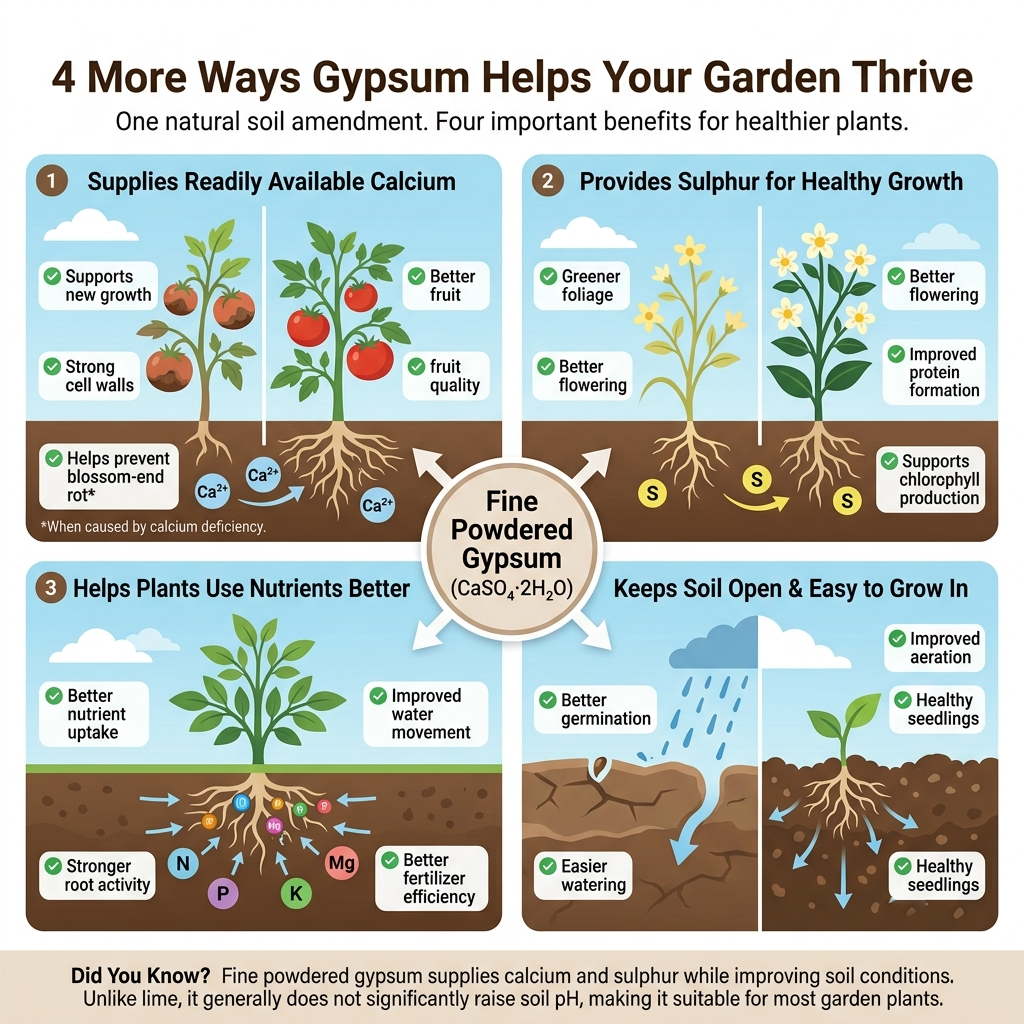
Gypsum supplies calcium and sulphate in a form that can contribute to soil-conditioning processes.
How gypsum works in sodic soils
In sodic soils, excessive exchangeable sodium can cause clay particles to disperse. This can lead to:
- Poor aggregation
- Surface crusting
- Reduced infiltration
- Restricted drainage
- Poor aeration
- Difficult root penetration
Calcium supplied by gypsum can help displace exchangeable sodium from soil exchange sites. Once displaced, sodium can be leached from the root zone provided sufficient water movement and drainage are available.
This is why gypsum is particularly relevant to sodic soil remediation rather than simply being described as a general “soil loosener.”
Salt-affected soils
Salt and sodicity are related but different soil problems.
Gypsum can be useful where sodicity or calcium deficiency in the soil structure is part of the problem. It does not independently remove all soluble salts from soil.
For salt management to work effectively, the system needs:
- Appropriate amendment where required
- Adequate-quality irrigation water
- Sufficient water for leaching
- A drainage pathway for the displaced salts
Without drainage, salts can remain within the root zone.
Water movement
Improved soil aggregation can increase the continuity of soil pores and help water move more effectively through the profile.
However, gypsum will not necessarily improve infiltration in every compacted soil. Compaction caused by mechanical traffic, poor organic matter management or other physical factors may require different interventions.
Suitable applications
Gypsum (Marine) can be considered for:
- Sodic soils
- Dispersive soils
- Structurally degraded soils where gypsum is appropriate
- Salt-affected agricultural soils as part of an integrated programme
- Garden soils with identified structural issues
- Nursery growing areas where soil testing indicates a need
- Landscape soils requiring soil-conditioning measures
Problems this product helps address
Gypsum (Marine) is intended to support soil-management challenges such as:
- Sodic soil conditions
- Dispersive soil structure
- Poor infiltration associated with sodicity
- Soil structural degradation where gypsum is appropriate
- Calcium-related soil-conditioning requirements
- Salt-management programmes where sodium displacement is required
- Restricted water movement caused by dispersive soil conditions
- Root-zone physical conditions requiring soil amendment
Important distinction
Not every hard, compacted or poorly draining soil requires gypsum.
Soil texture, compaction mechanism, organic matter, sodicity, salinity, drainage and irrigation-water quality should be considered before application.
Application method and dosage
Important: dosage is soil-specific
There is no scientifically reliable universal gypsum dosage for all soils.
The required quantity depends on:
- Soil texture
- Exchangeable sodium percentage
- Cation exchange capacity
- Existing calcium status
- Soil depth being treated
- Sodicity severity
- Irrigation-water quality
- Drainage
- Intended crop
For professional applications, a soil test should be used to determine the gypsum requirement.
Soil application
Distribute the required quantity uniformly over the treatment area.
Where appropriate, incorporate into the soil according to the soil-management programme.
Follow with adequate irrigation to allow the amendment to interact with the soil and, where sodium displacement is intended, facilitate subsequent leaching.
For salt-affected soils
Gypsum should be considered together with a leaching and drainage programme.
Simply adding gypsum without providing a pathway for salt movement will not reliably remove accumulated soluble salts from the root zone.
Garden and landscape use
For garden soils, apply according to soil-test recommendations or the product label.
Avoid applying a large quantity simply because the soil appears compacted. First determine whether sodicity or another soil condition is responsible.
Container applications
Container-grown plants require particular caution.
Because containers have limited soil volume, drainage behaviour can differ substantially from field soil. Use only an appropriate container rate and ensure that the drainage pathway is functioning properly.
Application frequency
Gypsum is generally used as a soil amendment rather than a frequent routine input.
Reapplication should be based on soil condition and monitoring rather than an automatic short interval.
Precautions
- Do not assume gypsum is required simply because soil is hard or compacted.
- Test soil where significant amendment is contemplated.
- Ensure adequate drainage before attempting salt leaching.
- Avoid excessive application without a soil-management rationale.
- Consider irrigation-water quality in salt-affected soils.
- Do not confuse salinity with sodicity; they require different management considerations.
Storage
Store in a cool, dry and well-ventilated location, protected from moisture.
Keep the package properly closed when not in use.
Assumption: Because no crop-specific or soil-test dosage was supplied, a numerical universal rate has intentionally not been invented. Gypsum requirements are properly determined from soil properties and the specific soil-management objective.
FAQ(s)
1. What is Gypsum (Marine) used for?
It is a soil amendment used to support soil structural improvement and calcium management, particularly where sodicity or dispersive soil conditions are involved.
2. Does gypsum loosen soil?
Gypsum can improve soil physical condition in suitable soils, especially sodic or dispersive soils. It should not be considered a universal solution for every form of soil compaction.
3. Can gypsum help with salt-affected soil?
It can assist in managing certain salt-affected soils, particularly where sodicity is involved. Effective salt removal also requires adequate water movement and drainage.
4. Does gypsum itself flush salts out of soil?
Not directly. Gypsum can help displace exchangeable sodium, after which adequate irrigation and drainage can facilitate movement of sodium and soluble salts below the root zone.
5. Why is drainage important?
Without drainage, water carrying displaced salts cannot leave the root zone effectively. Poor drainage can therefore limit the success of a salt-management programme.
6. Can gypsum improve water infiltration?
It can improve infiltration where poor infiltration is related to dispersive or sodic soil structure. It will not necessarily solve infiltration problems caused by every form of compaction.
7. Can I apply gypsum to any soil?
Gypsum can be used in many soil-management situations, but it is most valuable when there is a demonstrated need. Soil testing is preferable before significant applications.
8. Is gypsum a fertilizer?
Its primary role here is as a soil amendment, not as a complete plant nutrition product. It can contribute calcium and sulphur, but its principal value is soil and root-zone management.
9. How much gypsum should I apply?
The appropriate rate depends on soil properties and the treatment objective. Professional applications should use soil-test information rather than a universal rate.
10. Can gypsum be used in containers?
Yes, where appropriate, but container application requires greater care because the growing-medium volume and drainage conditions differ from field soil.
11. How often should gypsum be applied?
It is generally applied according to soil condition rather than on a routine monthly schedule. Reapplication should be based on soil assessment.
12. Can gypsum fix all compacted soil?
No. Compaction can result from several causes. Mechanical compaction, poor organic matter management and inadequate soil structure may require practices other than gypsum.

Reviews
There are no reviews yet.